
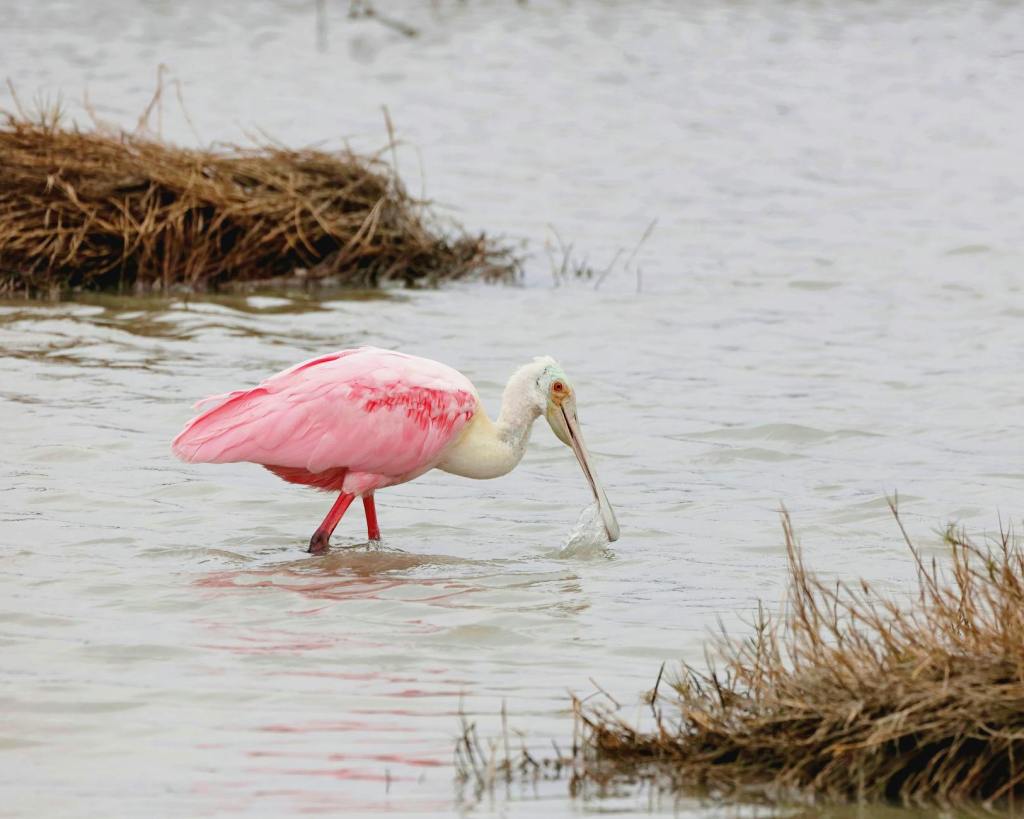
| Scientific Name | Platalea ajaja |
| Geographical Range | Southern United States, West Indies, Central America, South America |
| Habitat | Freshwater and saltwater wetlands |
| Conservation Status | Least concern |
Pretty In Pink
This month I will be focusing on the species Platalea ajaja, the Roseate Spoonbill. They are one of the most beautiful and strange birds that I learned about while living in Florida. This month I will also be discussing wetland habitat economic services and conservation, including one of the most amazing wetlands in the world: The Everglades.
The best way to describe this species is a large wading bird with a spoon-shaped bill and has an astonishingly pink feather coloration that reminds me of strawberry shortcake. You can find these social birds foraging in the shallow waters of wetlands in southern Florida, coastal Texas, and southwestern Louisiana. Their breeding range extends as far south as Argentina, Chile, and Uruguay.
Fun Fact! Like humans, Roseate Spoonbills can go bald as they age. Instead of losing hair like us, they lose feathers from the top of their head!
What is the advantage to having a spoon shaped bill? This allows them to scoop up prey from shallow waters. Roseate Spoonbills use a specific feeding style called “head swinging” which involves sweeping their head side to side with their bill partially open in the water while foraging. Once prey is detected on their bill, they snap it shut and often swallow the item whole. Roseate Spoonbills enjoy eating crustaceans like shrimp and prawns along with small fish. Similarly to pink flamingos, Roseate Spoonbills get their pink coloration from the foods they eat. Crustaceans and other aquatic invertebrates contain pigments called carotenoids. The carotenoid beta carotene is a red-orange pigment that turns the spoonbill’s feathers pink. This same effect can be seen when you cook shrimp or lobster. Enzymes in the bird’s digestive system break down the carotenoids into pigments which are absorbed by fats and eventually deposited into their feathers.
Nesting
Spoonbills are very social birds often found in groups ranging 2-400 individuals. They nest in roosting sites with egrets, herons, and ibises in trees above water or islands. To attract a mate, males will participate in courtship displays that include clapping, dancing, and bringing nesting materials to the females. Once paired, they only stay together for that nesting season. Together the male and female construct a bulky nest lined with softer materials like moss and leaves for the female to lay her eggs. Chicks will stay in that nest for four or five weeks under the care of both parents. Even after leaving the nest they will remain close by until they perfect flying and foraging on their own. While young their plumage is dull and brightens up with maturity.
Conservation
While this species is currently of least concern, this was not always the case. In the mid to late 1800’s Roseate Spoonbills were widely hunted for their feathers. Their pink and orange feathers were popular in women’s fashion for making hats and fans. It was not until the 1940’s when spoonbills gained legal protection. While we have documented a steady increase in population size, there are some concerns scientists have regarding their future. Many of these concerns are for human disturbances that can result in stress or nest abandonment. Destruction of this species’ habitat for human development has caused migrations to more vulnerable sites like those exposed to pesticide runoff.
How can you Help?
- Minimize your use of pesticides when caring for your yard and garden to help protect the waterways.
- Pick up after your pet and and please do not litter. These can help to keep your local watershed healthy.
- Organize or attend waterway (i.e. beach, lake, or river) cleanups to preserve local habitats!
References
Kaufman, K. (2001). Lives of north american birds. Boston: Houghton Mifflin.
Roseate Spoonbill Life History, All About Birds, Cornell Lab of Ornithology. (2019). Retrieved August 02, 2020, from https://www.allaboutbirds.org/guide/Roseate_Spoonbill/lifehistory
Reflection
I wanted to briefly reflect on my first month of writing. Overall, I was excited with the outcome and the reviews I got. I tried out a few different writing styles but think I still need to work on improving what style I want this blog to be. I really want to thank all my subscribers and viewers for the valuable feedback, please keep it up! I am always looking for suggestions so feel free to comment on a post or email me privately. Cheers!


 The Artful Biologist
Leave a comment