
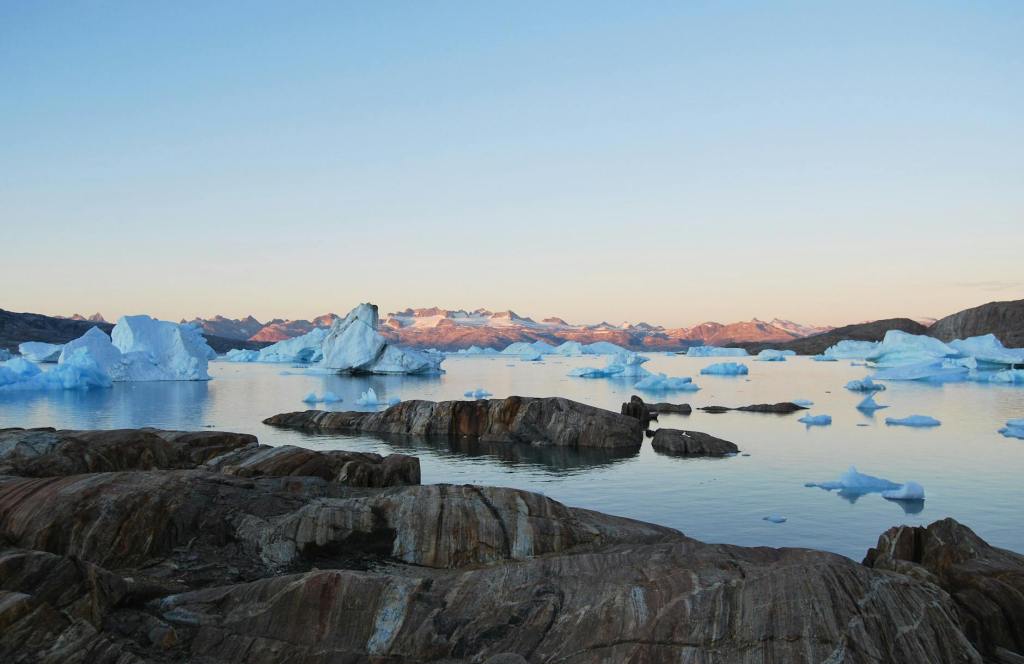
Will Melting Sea Ice Lead to More Phytoplankton Blooms?
A study recently published in Science has claimed that primary production has increased as a result of melting sea ice. We are all aware that the Arctic is warming up faster than most other regions as a result of climate change. Correspondingly, higher levels of primary production and greater expanded area of phytoplankton in the open ocean have been observed. Scientist have continually debated whether or not continued sea ice decline will affect the net primary production in the open ocean. Large amounts of freshwater could inhibit the upwelling because of a more intense stratification. Without upwelling, the biological carbon pump could not work. Alternatively, more storms as a result of climate change could promote upwelling in the open water. This study presented two decades of complete datasets of the phytoplankton biomass in the Arctic Ocean and created a “current” trajectory of the net primary production.
Methods
The study used a modified version of the standard empirical NASA Chl a (chlorophyll a) algorithm to evaluate primary productivity trends in the Arctic Ocean from 1998 to 2018. Chlorophyll a is the primary pigment used in photosynthesis that absorbs violet, blue and red wavelengths while reflecting green. The algorithm returns the concentration of chlorophyll a in mg m^-3 from the ocean surface. This calculation uses an empirical relationship from local measurements of chlorophyll a and remote sensing reflectances in the blue to green region of the visible spectrum. The estimates in the study combined sea ice concentration, sea surface temperature and chlorophyll a concentrations.
Results
Chlorophyll a concentrations increased 22% in 21 years. The majority of the increase in primary productivity occurred from 2009 to 2018. Changes in phytoplankton biomass were responsible for an observed increase in primary productivity. With less sea ice coverage and more frequent intense storms, upwelling of previously inaccessible, nutrient-rich, deep waters occurred. This study concluded that this documentation of the primary production from 1998 to 2018 was driven by partly increased phytoplankton concentration and increased open water area.
Conclusion
I thought this study tied in with last week’s blog on the biological carbon pump. I ended that post wondering if more nutrients could help the cycle run more efficiently. With the information from this study I believe that it could! With new nutrients from the deep waters of the Arctic being mixed into the water column, the Arctic Ocean could become more productive and support further carbon export. Unfortunately, this idea is solely based on humans influencing climate change and loss of Arctic habitat. What do you think about this idea? Could melted sea ice aide in combating excess carbon dioxide in the atmosphere? Would this only be a short-term positive benefit from global warming?
References
Lewis, K. M., Van Dijken, G. L., & Arrigo, K. R. (2020). Changes in phytoplankton concentration now drive increased Arctic Ocean primary production. Science, 369(6500), 198-202. doi:10.1126/science.aay8380
Feldman, G. C. (n.d.). NASA Ocean Color. Retrieved October 19, 2020, from https://oceancolor.gsfc.nasa.gov/atbd/chlor_a/
 The Artful Biologist
Leave a comment