
Hello Readers! I hope everyone had a wonderful holiday and a good start to the new year. I have been busy the past month with holidays and graduate school applications. I have many goals for my blog this year! I would like to add more content focused on sustainability and continue to progress with my “Art” page. If there is any content related to marine science, environmental policy, avian ecology, or art that you are interested in me covering, please email me and I will look into it.
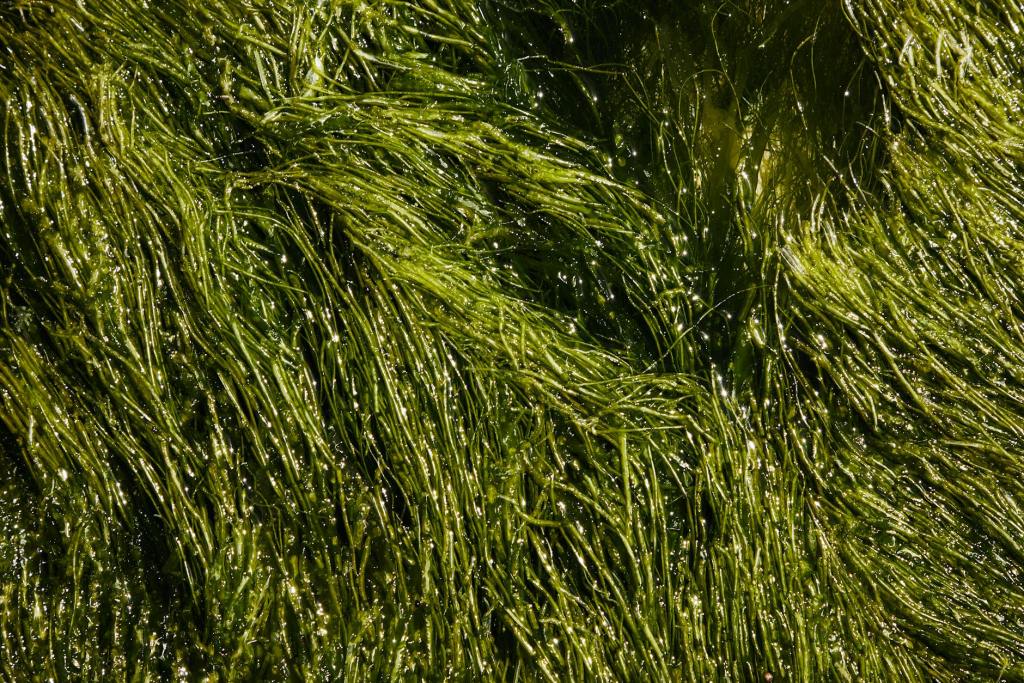
To start the new year, I decided to bring some attention to seagrass meadows. Some of my favorite college memories include exploring the wonderful seagrass community. Seagrasses are highly productive and found in shallow salty or brackish waters. These communities are a vital habitat for many organisms including commercially important fish. Seagrasses provide stable primary productivity and a great deal of ecosystem services. Some biologists use seagrass beds to estimate the overall health of coastal ecosystems because they have a vast biodiversity and are sensitive to changes. Seagrasses also provide sediment stability, maintain water quality, and support local economies. Sadly, many seagrass meadows have been lost because of human activities. There have been many recent studies to grasp how to protect and restore lost seagrass communities.
Seaweed or Plant?
Many mistake seagrasses for algae, but it is more like the flowering plants we see on land. The main differences can be described by their structure and reproduction. Seagrasses had a land ancestor who eventually evolved to migrate into salty water. For this reason, the tissue structures of seagrasses (leaves, roots, stems) are very similar to land plants. Algae, on the other hand, do not have those same tissue structures. Instead, they have blades, holdfasts, and stipes. In terms are reproduction, seagrasses have separate sexes, produce flowers fruits, and seeds. This contributes to a greater biodiversity. Algae can reproduce asexually by fragmentation or sexually by producing spores. There are about 55 different seagrass species with a surprising amount of diversity.
Restoration
Destruction of seagrass meadows can be detrimental to the coastal marine ecosystem. Boat’s propellers can cut through the grass, or excessive trawling and dredging can disrupt the roots. Runoff pollution and harmful fishing practices can also be detrimental to seagrasses. Most management strategies focus on preserving biodiversity and the anthropogenic services seagrasses provide. Recently, attempts to rebuild seagrass meadows have demonstrated decent success. For example, in a salt marsh off the southern end of Virginia’s Eastern shore, a restoration project witnessed ecosystems rebounding ten years after planting 70 million seagrass seeds. After another ten years, they described the restored meadows as similar to one undisturbed.
How can you help?
As always, I think being educated on the importance of seagrass meadows and what can harm them is the most important step towards seagrass protection and recovery. There are other simple ways you can do more to protect seagrasses. Please do not litter or dump any hazardous waste down your drains. If possible, avoid using excess fertilizers and pesticides that will wash away in the rain. Practice smart boating, make an effort to avoid navigating through shallow grass beds. In the coming weeks, we will see how seagrass meadows are critical to the marine environment and towards combating climate change.
References
Costanza, R., d’Arge, R., de Groot, R. et al. The value of the world’s ecosystem services and natural capital. Nature 387, 253–260 (1997). https://doi.org/10.1038/387253a0
Pamela L Reynolds reviewed by Emmett Duffy and Nancy Knowlton. (2018, December 18). Seagrass and Seagrass Beds. Retrieved January 17, 2021, from https://ocean.si.edu/ocean-life/plants-algae/seagrass-and-seagrass-beds
Seagrasses. (n.d.). Retrieved January 17, 2021, from https://myfwc.com/research/habitat/seagrasses/
 The Artful Biologist
Leave a comment