Happy Monday! Is anyone else feeling like this month went by in the blink of an eye? Last week I discussed some background on what seagrass is and how important ecosystem preservation and restoration is. Today I wanted to focus on what benefits seagrass meadows provide to marine life and to us. What I cover in today’s blog will only scratch the surface of the number of benefits that seagrass meadows offer. There are many gaps in our comprehension of this ecosystem’s services, and there is little public knowledge about seagrasses and their benefits. This unfortunately means that there is not enough attention given towards seagrass meadows in coastal management decisions.
How Do Marine Animals Benefit from Healthy Seagrass Meadows?
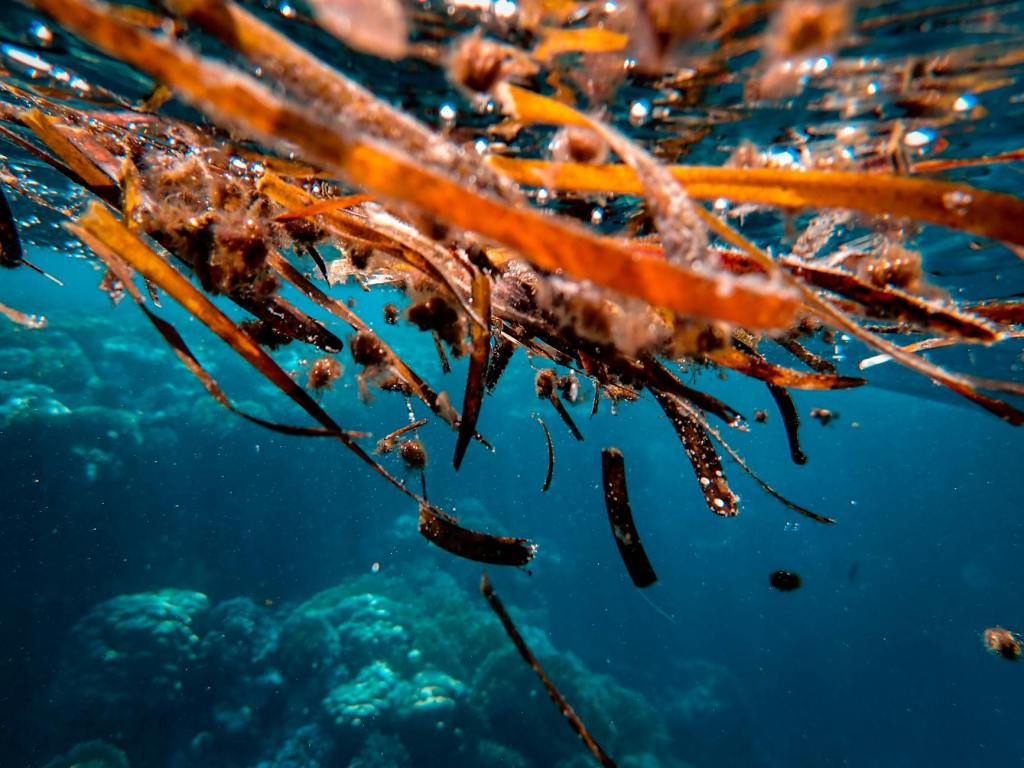
Seagrass is a foundation for many species as it provides a unique habitat or home for a lot of marine life. In fact, seagrass meadows are often referred to as nurseys because they provide the perfect shelter and nutrients for juvenile invertebrates like crabs and shrimp. There are even tiny organisms that grow and live on the leaves of seagrass similar to how lichen grows on a tree. As a result of these small organisms living wrapped in, on, or under seagrass, many larger animals are attracted to seagrass meadows. Seagrasses, therefore, are home to many cephalopods, sharks, crustaceans, and echinoderms. Some are permanent while others only migrate there temporarily. One single acre of seagrass can support upwards of “40,000 fish and 50 million small invertebrates” plus many more in a seagrass bed.
These feeding grounds are crucial for many organisms in three different ways. First, seagrass directly provides food to grazers like turtles and manatees. Second, those tiny organisms that grow on the seagrass provide food for the developing crabs, snails, and shrimp. Which in turn will be consumed by a larger predator. Finally, dead seagrass is important in providing nutrients to decomposers. Seagrasses are an important foundation of coastal food webs.
How Do We Benefit from Healthy Seagrass Meadows?
There are ecosystem services from seagrasses that benefit our needs directly and indirectly. These benefits, though recently studied, have been around for over 10,000 years. For example, in Scotland in the early 18th century, seagrass was used to thatch roofs of homes instead of straw. Additionally, we have seen seagrass used in agriculture as fertilizer since 1824.
The three main benefits seagrasses provide are they clean the surrounding water, support commercial fisheries, and help to decrease the carbon dioxide in the atmosphere. Through the process of photosynthesis, one square meter of seagrass can generate ten liters of oxygen each day. Seagrass beds are important reservoirs of blue carbon. Blue carbon is carbon stored in the ocean and coastal ecosystems. Therefore, it is critical to preserve and restore seagrasses because they could be used to combat climate change. Restored meadows have been shown to sequester on average 3,000 metric tons of carbon, and 600 metric tons of nitrogen per year. Seagrasses filter surrounding water by absorbing nutrients, slowing the flow of water, and stabilizing the sediment with their roots. Their sediment stabilization is not only helping to improve water quality but helps protect from erosion and buffers the shorelines from storm surge.
Economic Impact of Seagrass Meadows
Like other ecosystems, it is difficult to value and rank the benefits seagrass meadows provide. In some communities where seagrass benefits are directly impactful, they are valued higher than in distant areas who only benefit indirectly from seagrasses. One source claimed that seagrass services are valued at more than $19,000 per hectare per year. This same source also claimed that fisheries in the Mediterranean Sea have an annual economic value of at least €190 million from seagrass meadows. The actual number would be much greater than this if all ecosystem services were accounted for in this study. I would think that tourism and recreational fishing and snorkeling would add to this value immensely.
I hope this blog has given you a better understanding of the importance of seagrass meadows to everyone, no matter your location. Researching all ecosystems is important in understanding the effect of the rising global environmental challenges we are facing. Understanding the benefits they have to offer and how to restore and preserve these ecosystems could play a key role in creating sustainable solutions for these challenges.
Where to Find Out More
Seagrass Watch is a global seagrass monitoring network that works to raise awareness about the current condition and trend of seagrass ecosystems.
Seagrassnet is also a global seagrass monitoring program that investigates and documents the status of seagrass resources and the threats they are facing.
References
Nordlund, Lina & Koch, Evamaria & Barbier, Edward & Creed, Joel. (2016). Seagrass Ecosystem Services and Their Variability across Genera and Geographical Regions. PLOS ONE. 11. e0163091. 10.1371/journal.pone.0163091.
Lina Mtwana Nordlund, Emma L. Jackson, Masahiro Nakaoka, Jimena Samper-Villarreal, Pedro Beca-Carretero, Joel C. Creed,
Seagrass ecosystem services – What’s next?, Marine Pollution Bulletin, Volume 134, 2018, Pages 145-151, ISSN 0025-326X, https://doi.org/10.1016/j.marpolbul.2017.09.014.
Pamela L Reynolds reviewed by Emmett Duffy and Nancy Knowlton. (2018, December 18). Seagrass and Seagrass Beds. Retrieved January 17, 2021, from https://ocean.si.edu/ocean-life/plants-algae/seagrass-and-seagrass-beds
 The Artful Biologist
Leave a comment