

This past week I learned about uniquely sustainable and self-sufficient housing called Earthships. If you consider what life would be like on a spaceship or a ship at sea, there are roughly six basic human necessities that these structures must have for survival.
Those necessities include:
- Clean Water
- Energy
- Food
- Garbage Management
- Sewage Treatment
- Shelter
An Earthship is an environmentally friendly autonomous home built to provide the six basic human necessities. Earthships are built from the earth and recycled materials like tires, plastic, glass, etc. Generally, they minimize a home’s reliance on public utilities and fossil fuels. Thus these homes are often “off-the-grid.”
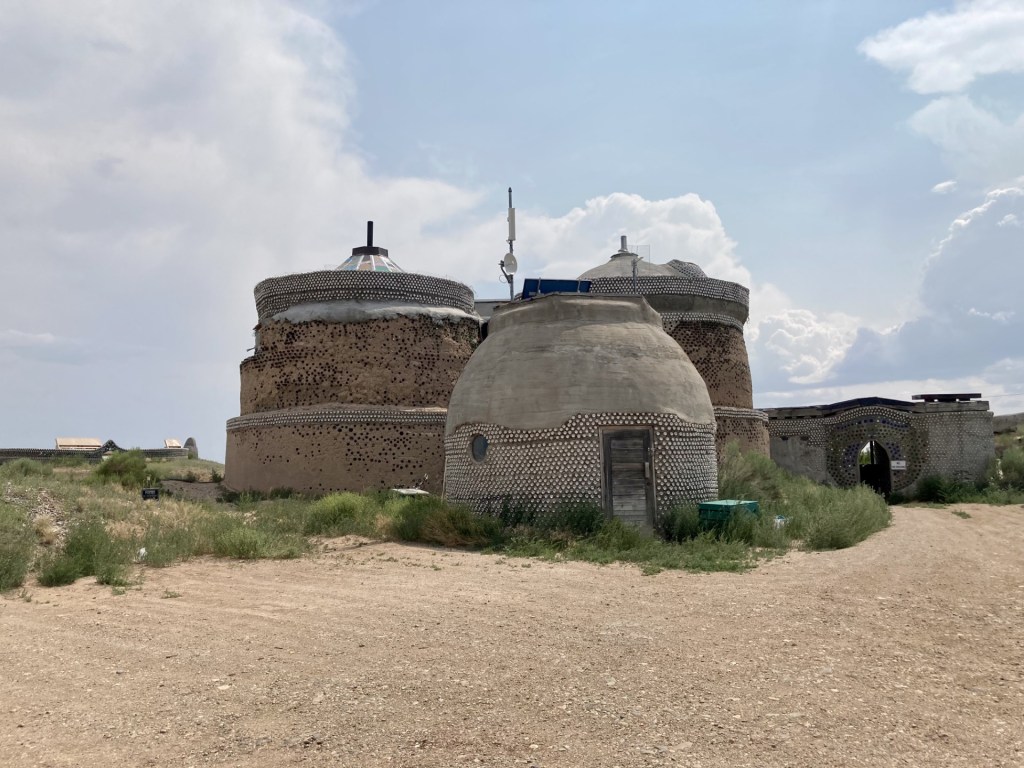
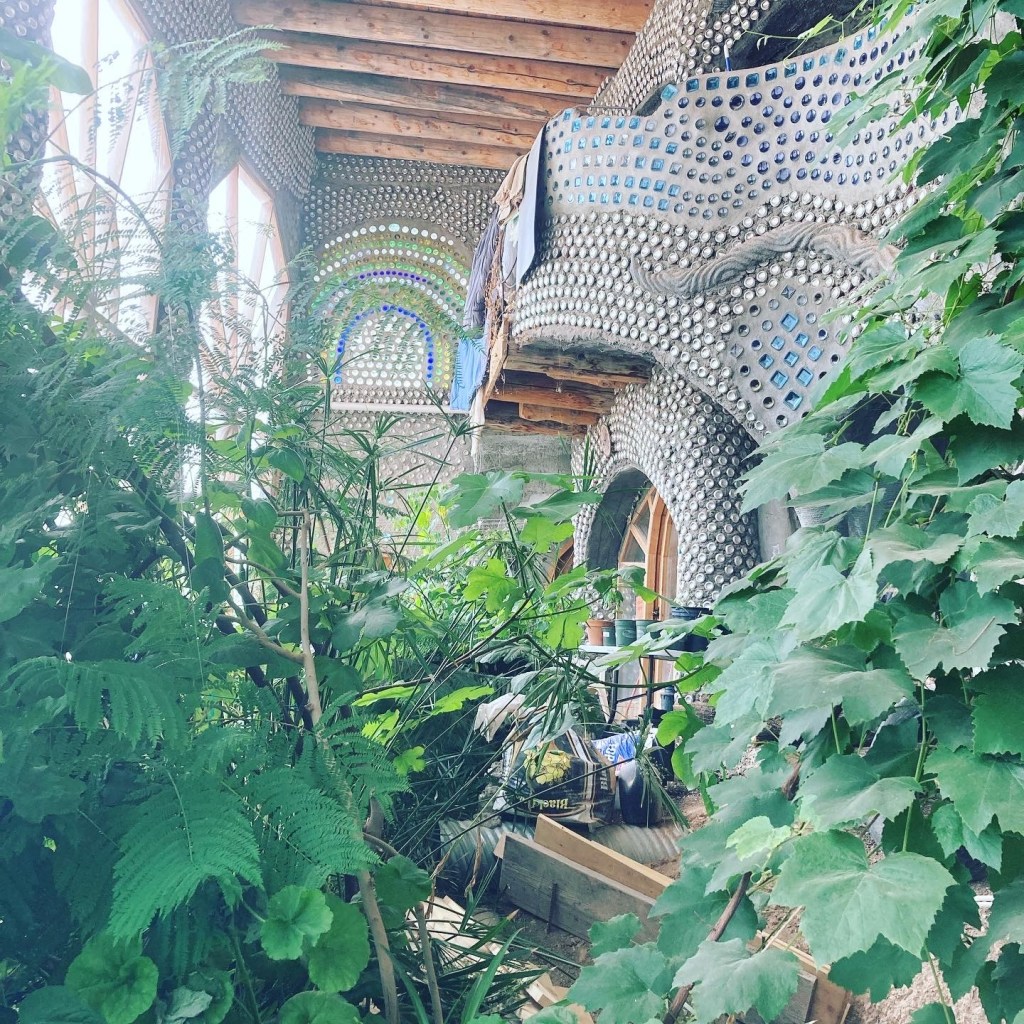
Earthships are still experimental however I was fortunate to tour several working and attractive houses.
History
The concept “Earthship Biotecture” was coined by architect Michael Reynolds and began in northern New Mexico in the 1970s. Reynolds set out to create a home of indigenous and recycled materials that used natural energy sources and could be constructed by anyone regardless of construction skills.
Construction
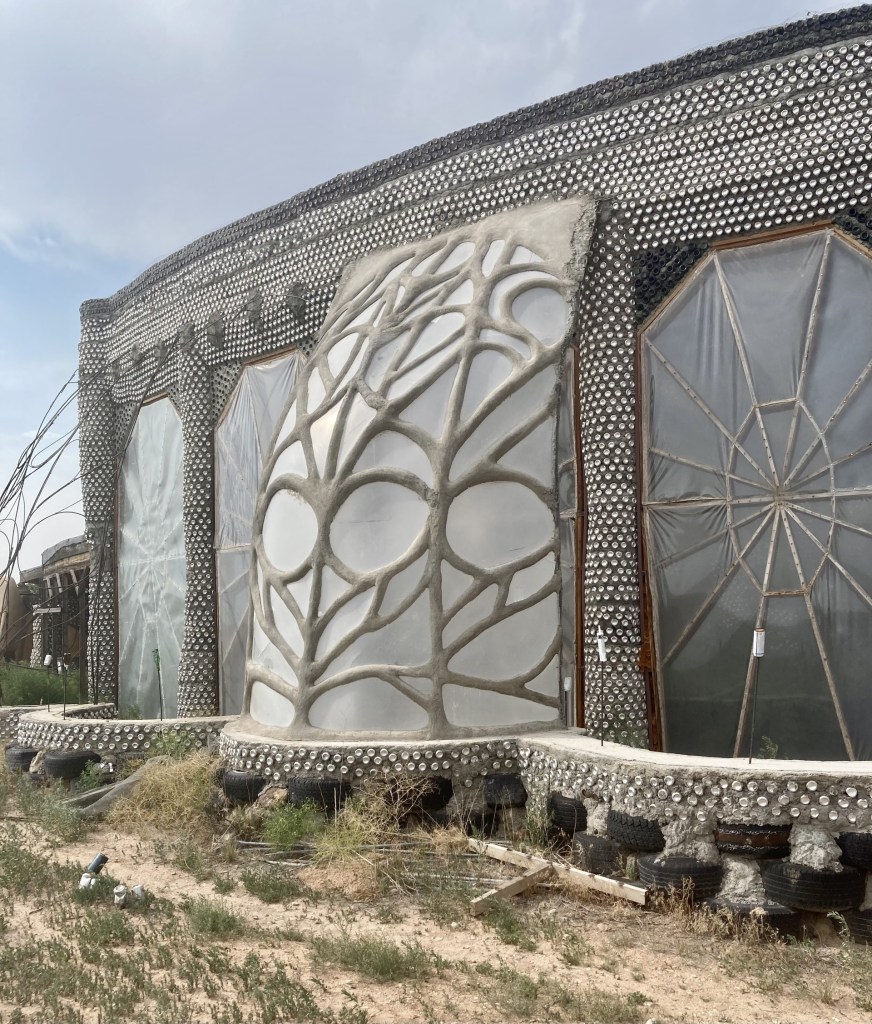
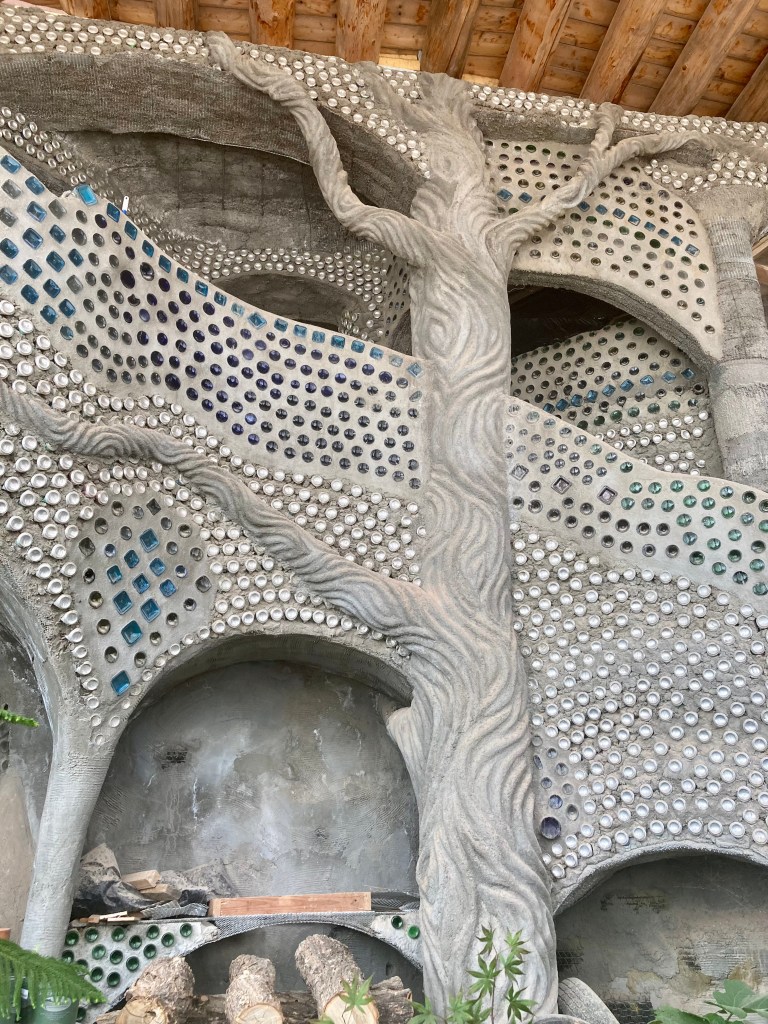
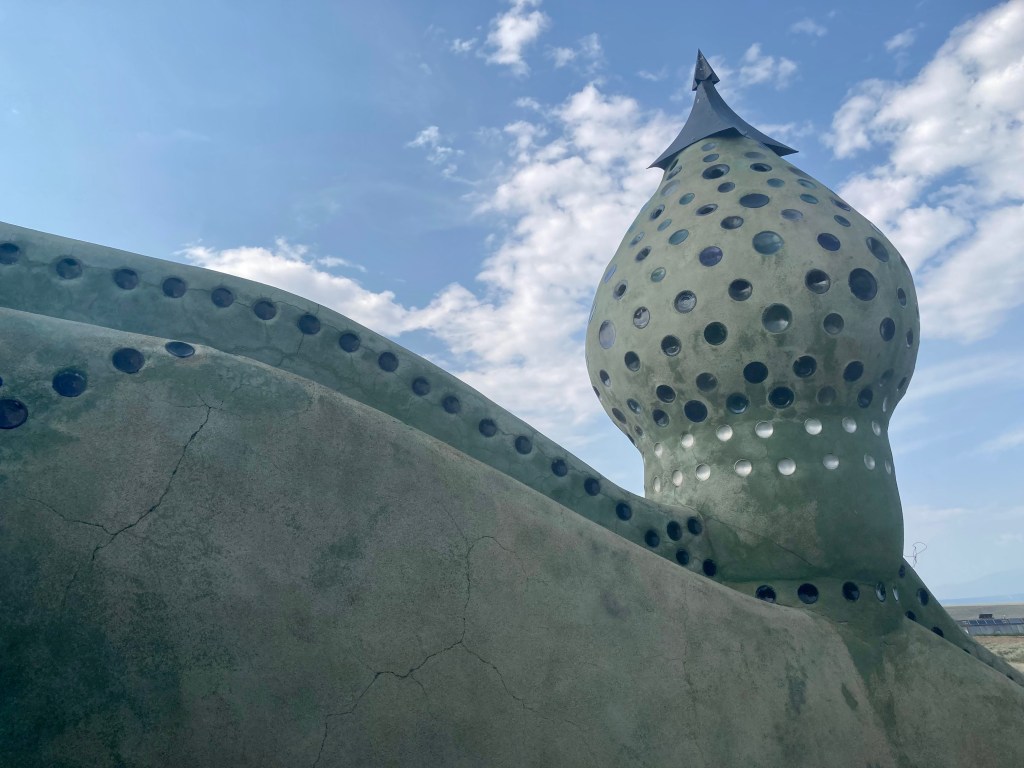
As I mentioned, Earthships are made of recycled materials, earth and adobe. The main design features a double layer of glass between the living space and the outside. This space acts as a greenhouse and aids with air ventilation, heating, and cooling. Tires are filled with dirt to make rammed-earth bricks. The tires are placed together and plastered over with adobe. Cans and glass or plastic bottles are in some walls for decorative purposes. Other materials used include plastic for insulation, cardboard, reclaimed wood, and indigenous materials.
Temperature regulation (thermal mass)
While visiting the Earthship community in Taos, NM, my biggest concern was how the homes regulate temperature. To understand their interior climate stabilization, we should first discuss thermal mass. Thermal mass is the ability an object or material has to absorb and store heat energy. High-density materials like concrete require an enormous amount of heat energy to change temperature. Thus these materials have a high thermal mass. On the flip side, lightweight materials such as timber have low thermal mass.
The Earthship walls have many earth-filled tires that provide a dense thermal mass. The Earthship positioning takes advantage of the Sun’s energy and light. Heat is absorbed by the tire walls during the day. At night, that energy releases into the room. This process keeps the home warm when it is cold outside. To keep the home cool, a ventilation system provides airflow from outside, through the thermal mass, cooling the air. Any hot air rises and flows back outside through skylights. The constant supply of fresh air also improves air quality with low radon levels.
Water
Getting water can be difficult if you live in a state with regulations or laws regarding rainwater harvesting. An Earthship uses harvested rain, snow, and condensation water. The collected water is stored in cisterns and flows through a filter to make it suitable for drinking. From there, water is pushed into pressure tanks to create water pressure for the home. All the water is recycled. Water that has been used once (e.g. showering) is no longer suitable for consumption, is collected and called greywater. Greywater is filtered naturally through plants like trees and bushes. The water is now only used for flushing toilets. The water, now called black water, can no longer be used. The black water is directed to a septic tank and eventually into botanical cells. By using greywater, there is less freshwater consumption and less strain on the septic tanks.
Energy
Most of the energy is harvested from sunlight using solar panels. Solar energy accumulates in batteries as DC energy. A Power Organizing Module (POM) inverts the stored energy for AC use like computers, appliances, and more. My main concern with reserving energy in lithium-ion batteries is hazardous electronic waste. I have heard that it is possible to recycle batteries although, it is not a universally well-established practice.
Food
Fresh fruits and vegetables can be grown inside the Earthship garden. All Earthships have windows along the front, sun-facing walls for energy and climate regulation. This space is a perfect greenhouse for gardening.
Final Thoughts
Earthships are a uniquely sustainable architecture concept. While I can see it becoming more popular as renewable energy technology advances, I can also see some potential disadvantages that would hinder people from building or purchasing an Earthship. Some disadvantages include water harvesting abilities, whether the thermal regulation is efficient in climates other than the Southwestern United States, and that they are in areas of low population density. I think there are many architectural features that we can assimilate from Earthships. We can integrate these aspects with future buildings to reduce environmental impacts. For example, we can design homes with more natural light and better thermal regulation to reduce energy consumption.
References
Ekvall, Martin, 2019. The earthship concept : a building technique and subculture aiming towards environmentally conscious-change. Second cycle, A2E. Uppsala: SLU, Dept. of Forest Economics
offgrid sustainable green buildings. Earthship Biotecture. (2021, July 21). https://earthshipbiotecture.com/.
Gaia. (n.d.). What is Earthship? http://environment-ecology.com/environment-and-architecture/375-what-is-earthship.html.

 The Artful Biologist
Leave a comment