
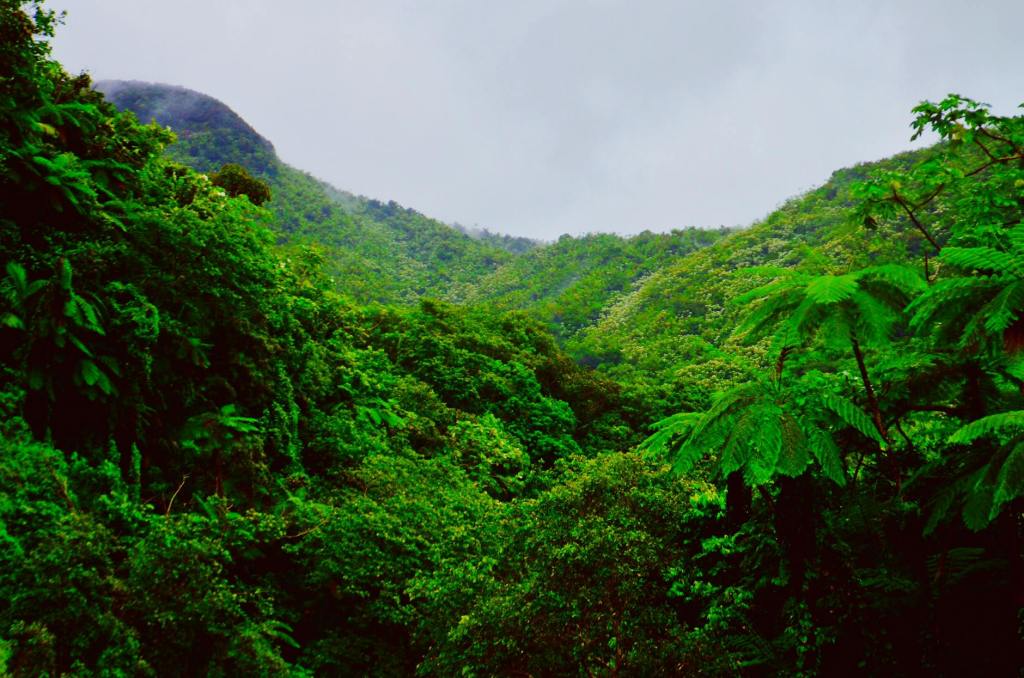
I first painted a toucan in sixth grade, probably as part of an art class project. I chose it for its oversized bill and the glowing oranges (my favorite color) that stood out against the deep blues and blacks of its feathers. I’m not alone in this fascination; these features have made the toucan one of the world’s most recognizable birds. It appears as a commercial mascot for products like stout and cereal, and in many Indigenous cultures, it carries profound and sacred meaning, often symbolizing joy, harmony, and a link between the human and spiritual worlds. The toucan’s beauty and unusual form aren’t just for show; they are essential to its survival. Yet these same traits also make it vulnerable to poaching and the loss of its rainforest home.
A Masterpiece of Biology
In both male and female toucans, the bill is large, brilliantly colored, and surprisingly lightweight. It’s built from a thin structure of keratin (the same protein found in our fingernails), a honeycomb-like sponge, and hollow center reinforced with thin rods of bone.

Bill size, shape, and color vary between species, making each instantly recognizable. For example:
- The Keel-billed Toucan (top left) has a kaleidoscope of green, red, and blue.
- The Yellow-throated Toucan (top right) has a striking split of chestnut and yellow.
- The Toco Toucan (bottom left) is the most iconic, with a bill that makes up a third of its body length, glowing orange with a black tip.
- The Chanel-billed Toucan (bottom middle) is sleek and mostly black, with a blue base.
- The Emerald Toucanet (bottom right) has a bright green plumage paired with a yellow and black bill.

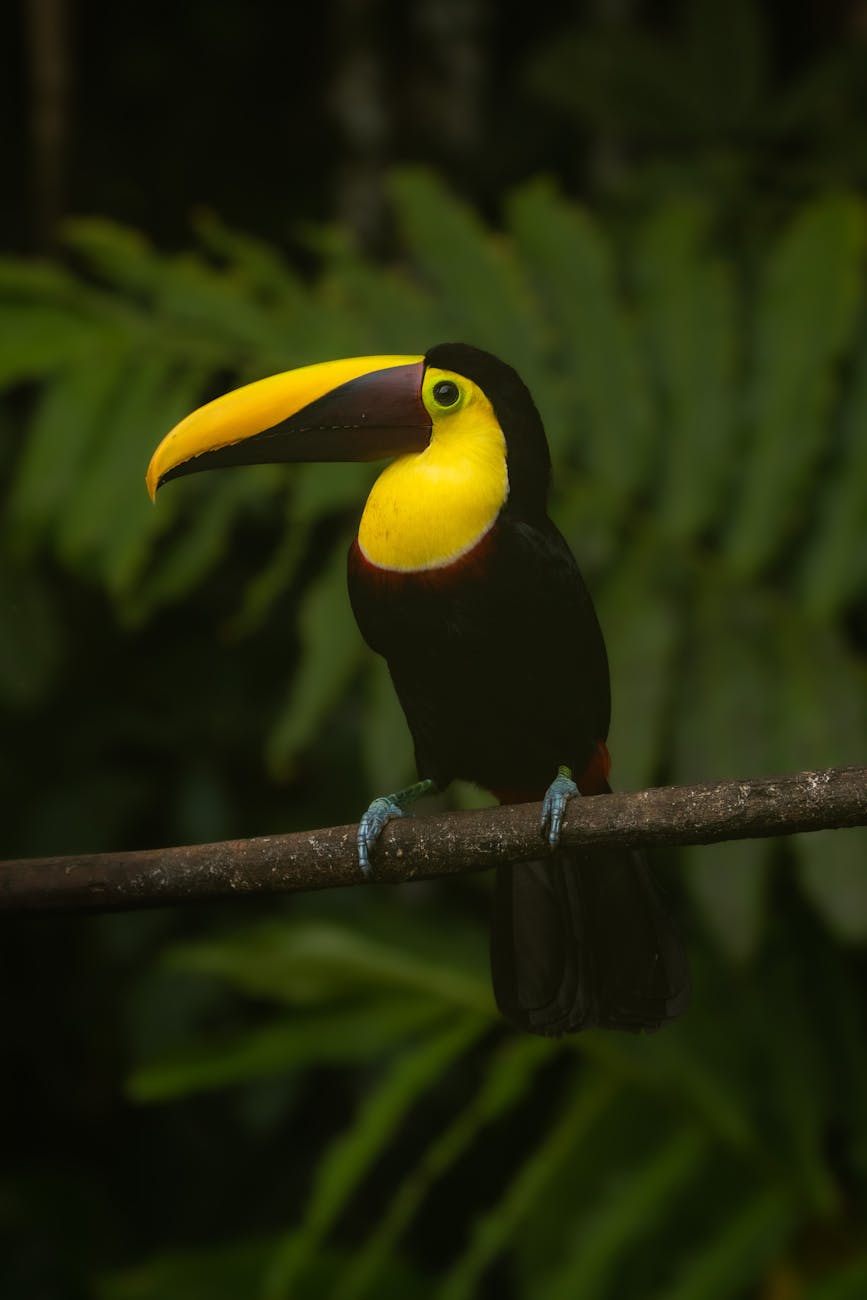
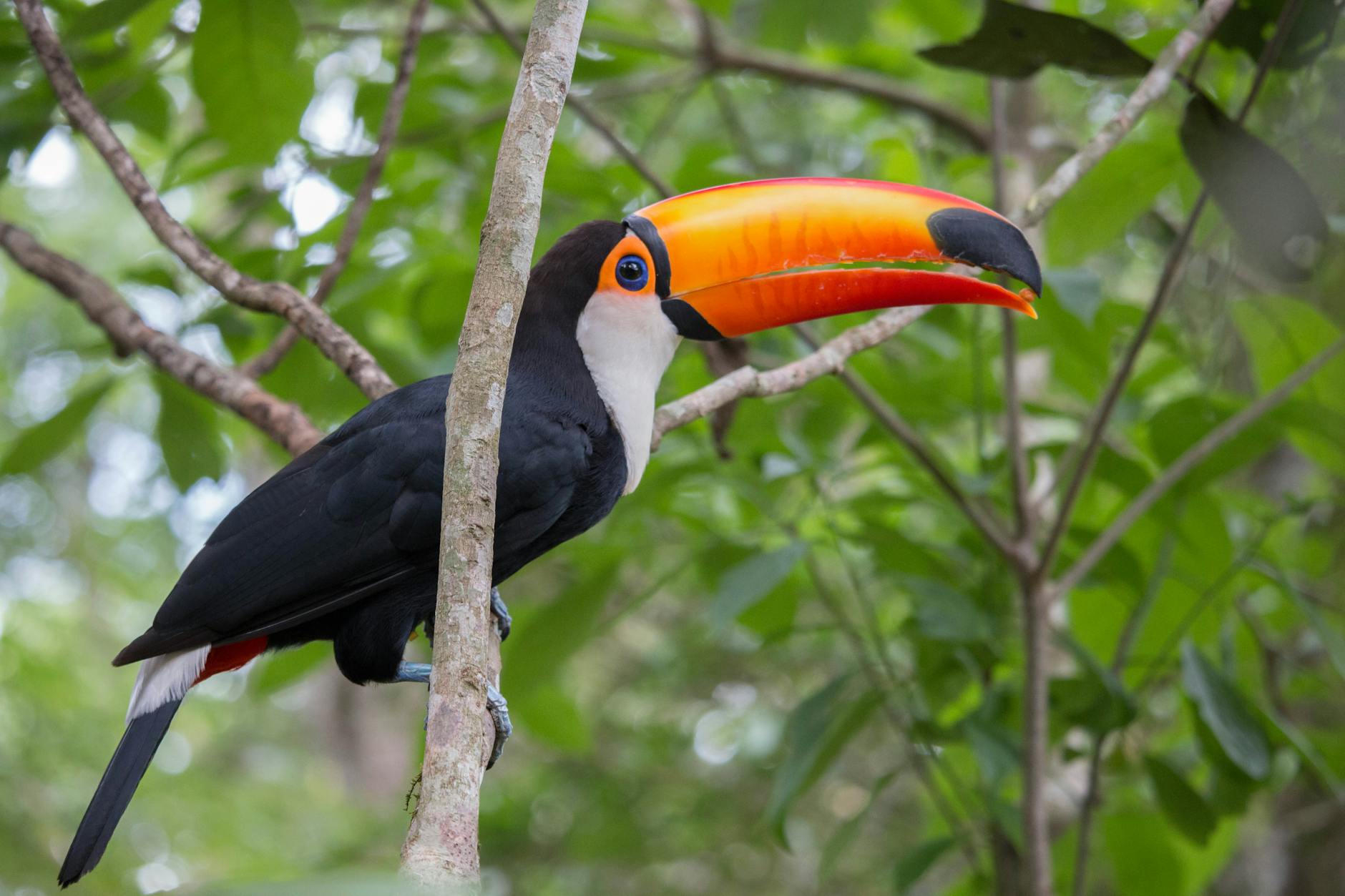
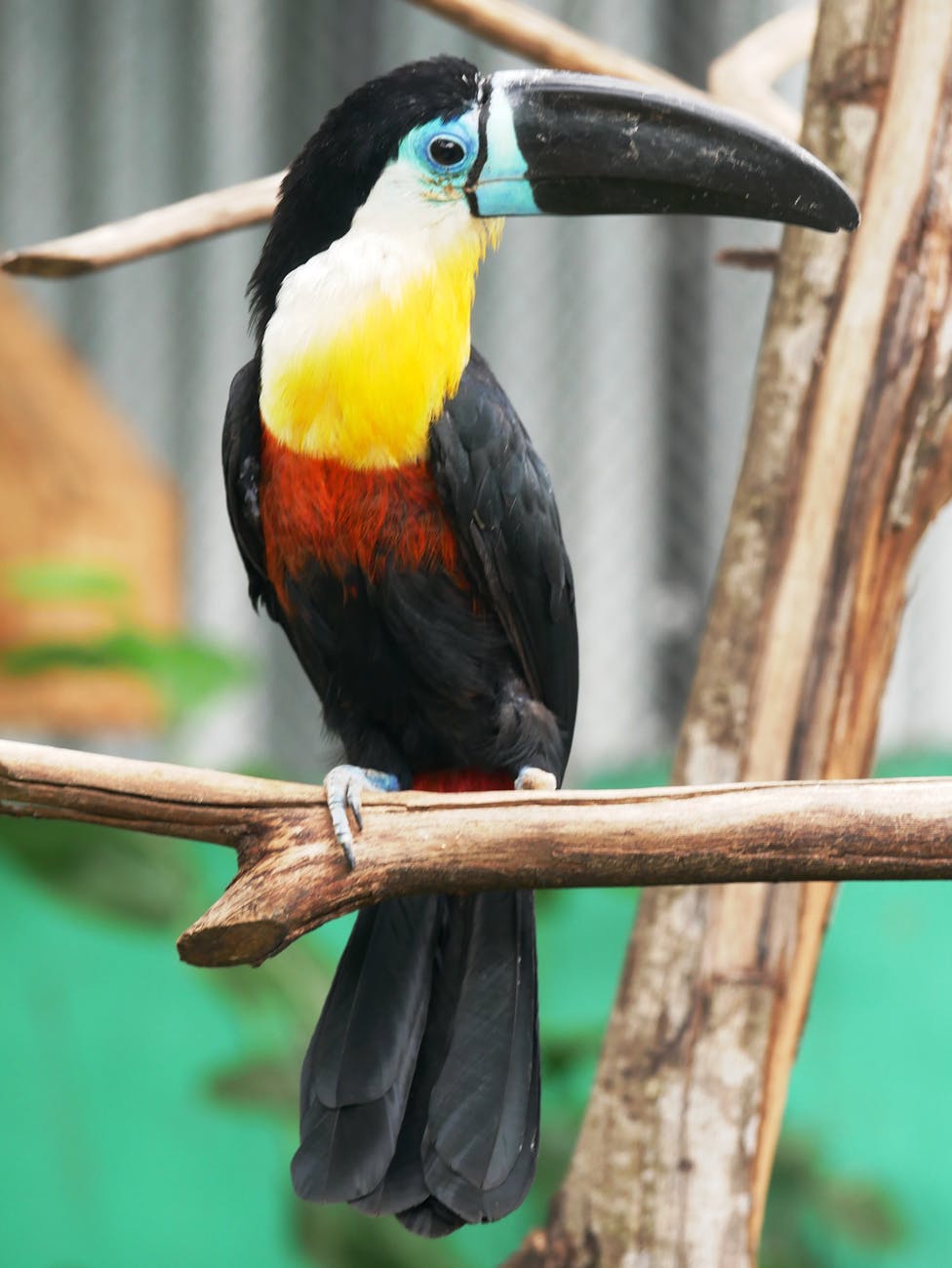

Why such a large and vivid bill? Scientists claim it serves multiple purposes, from feeding to courtship displays and social interaction, making it not just a visual marvel, but a finely tuned survival tool.
Functional Adaptations
Feeding – Reaching what others can’t
The toucan’s long bill allows it to gather food with minimal energy, accessing fruit and insects in spots other birds can’t reach. It can pluck fruit from branches too thin to support its weight, making it a highly efficient forager. The serrated edge helps the toucan to peel fruits like oranges and guavas.
Thermoregulation – Nature’s built-in radiator
The Toco Toucan has the largest bill relative to body size of any bird. Laced with blood vessels and lacking insulation, their mostly hollow bill is perfectly adapted for shedding excess heat. Blood is constantly pumped into the bill, and heat escapes through its thin outer layer. This process is especially effective when there’s a breeze, allowing the bird to release nearly all of its surplus body heat and stay cool even in the sweltering tropics.
Social Signals – Communication and play
The bill plays an important role in social interactions. During courtship, pairs toss pieces of fruit to one another in a display of bonding. In playful or competitive encounters, toucans fence with their bills and even wrestle, behavior that may help establish dominance within a group.
Threats to Toucans
The International Union for Conservation of Nature currently lists toucans as a species of “Least Concern” due to their wide range. Yet their populations are steadily declining. They are hunted for food and captured for the pet trade, where their intelligence and striking appearance make them a sought-after novelty, especially in the tourist “photo-op” market. Habitat loss is another major threat as deforestation reduces the fruit trees and nesting sites they depend on, while climate change alters the delicate balance of rainforest ecosystems. Pesticides and other pollutants contaminate their food and water sources, weakening their health and reproductive success, and vehicle collisions, in areas where roads cut through rainforest, are a frequent cause of injury and death.
How Art Becomes Advocacy
Art can play a powerful ally in conservation. In Costa Rica, the Toucan Rescue Ranch hosts an annual Call for Artists campaign, inviting people from around the world to submit pieces inspired by Costa Rica’s wildlife. These works are used in fundraising, education, and awareness efforts, with proceeds supporting rehabilitation and habitat protection. In Bolivia, Comunidad Inti Wara Yassi cares for wildlife rescued from trafficking, including toucans, and uses cultural programs and creative storytelling to engage local communities in conservation. Across the Amazon, the Amazon Conservation Team works with Indigenous communities to incorporate visual storytelling, murals, and traditional crafts into conservation initiatives, blending ecological protection with cultural preservation.
The urgency behind these efforts is real. I recently read about a person who was caught trying to smuggle 14 toucans at the California boarder. This unfortunately is not an isolated incident. A 2023 review using CITES data found that more than 22,000 toucans were exported globally between 1985 and 2018, generating nearly $72 million in retail value.
I think this reality inspired me to paint again. My watercolor of a toucan may not show migration routes or habitat loss, but I hope it connects with people in a different way. Visual art can create empathy and curiosity that data cannot. A field guide might show where toucan numbers are dropping, but a painting invites you to linger, feel the rainforest sun on its bill, and imagine what we would lose if that color disappeared from the trees. Art bridges the gap between information and emotion, inspiring connection and action.

Call to Action
- Support rainforest protection programs: Contribute to organizations safeguarding toucan habitats, such as the Rainforest Trust, World Land Trust, and Toucan Rescue Ranch. These groups focus on land conservation, species rescue, and habitat restoration.
- Buy from certified sustainable sources: When purchasing products like wood, coffee, or paper, look for certifications like the Forest Stewardship Council or Rainforest Alliance Certified. These ensure that your choices support responsible land use and reduce pressure on rainforest ecosystems.
- Follow and share the work of conservation artists and organizations: Art can continue to educate, inspire and empower new ambassadors for the environment.
Resources
Conservation Artists:
Artists for Conservation | world’s leading artist group supporting the environment
Artists for Wildlife Conservation | HOME
Artists for Wildlife | Forest Collective
Sources:
How Toucans Use Their Bills to Keep Cool | Audubon
(PDF) Beyond a feeding and thermoregulatory structure: toucan’s bill as a sword and pincer
 The Artful Biologist
Leave a comment