Science and art are deeply intertwined. Creativity fuels discovery, experimentation, and problem-solving, just as art helps bring scientific ideas to life. Visual storytelling makes complex topics more accessible, bridging the gap between research and understanding.
This space is where I share my paintings, scientific illustrations, and personal artwork—pieces that reflect both curiosity and connection to the natural world.
“The greatest scientists are artists as well” – Albert Einstein
A Micro-Mosaic
In the lab, we look through the lens to find characteristics and intricate details invisible to the naked eye. With a microscope, we can explore the worlds within worlds and learn about the building blocks and pathways of nature from cells to microorganisms. Abstract art can be found in these tiny structures and textures. My favorite of these images is the cyanobacteria, featuring the pointer. To me, the pointer creates a “You Are Here” moment, highlighting the vast difference in scale between our world and the intricate, sprawling ecosystem living in a single drop of water. This mosaic is a reminder that the deeper we look, the more the distinctions between ‘science’ and ‘art’ and ‘people’ and ‘nature’ dissolves.


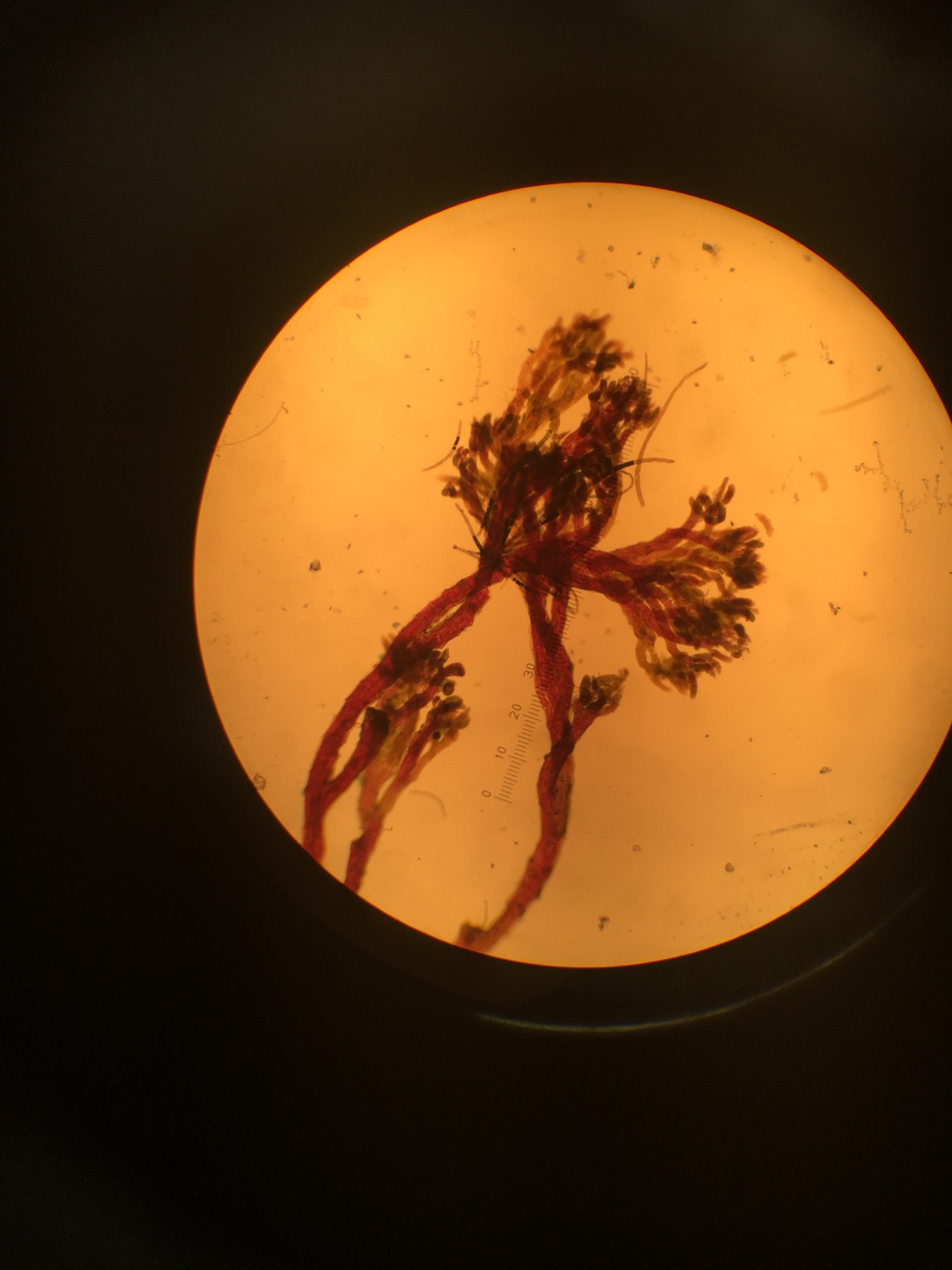
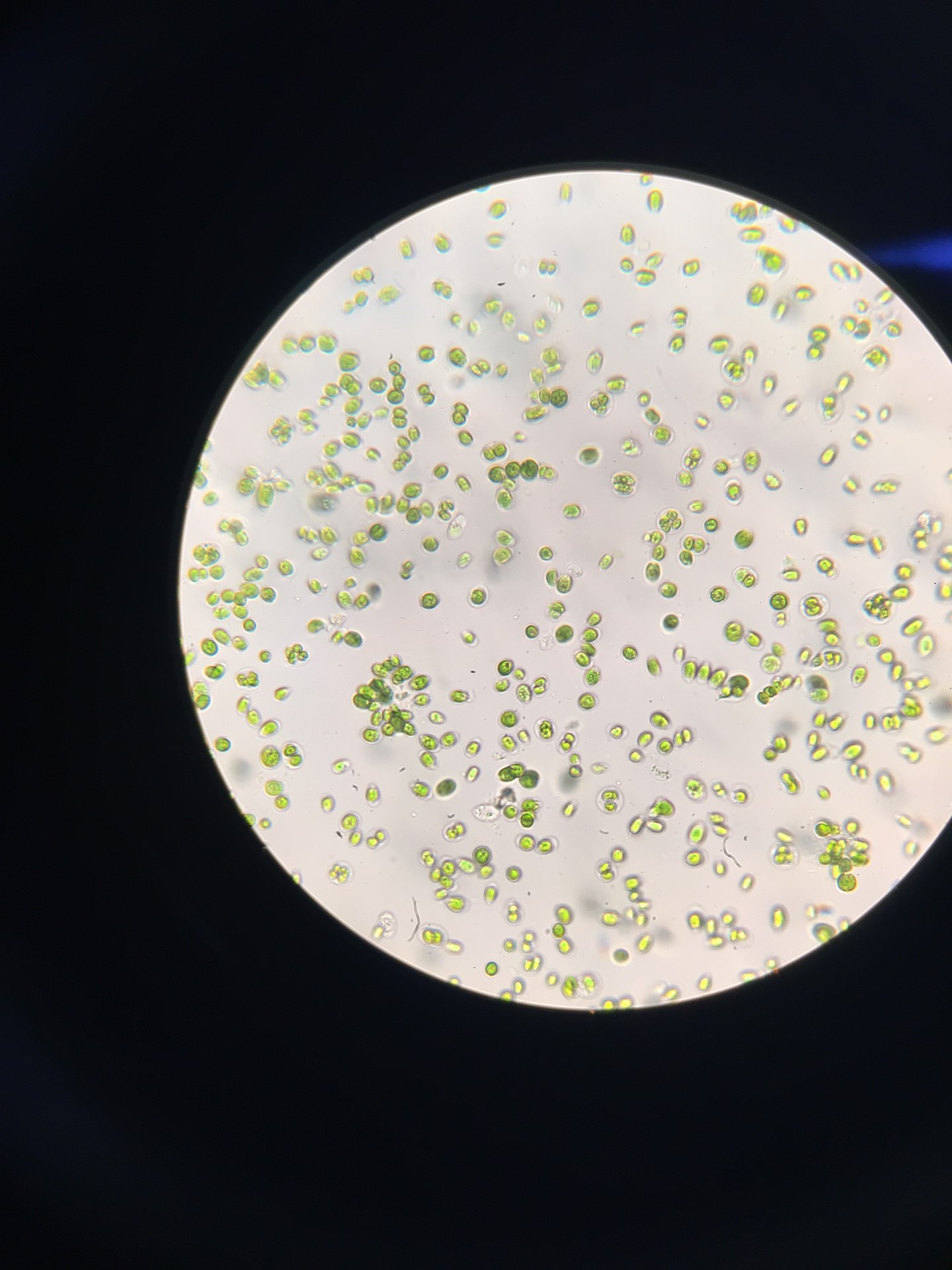
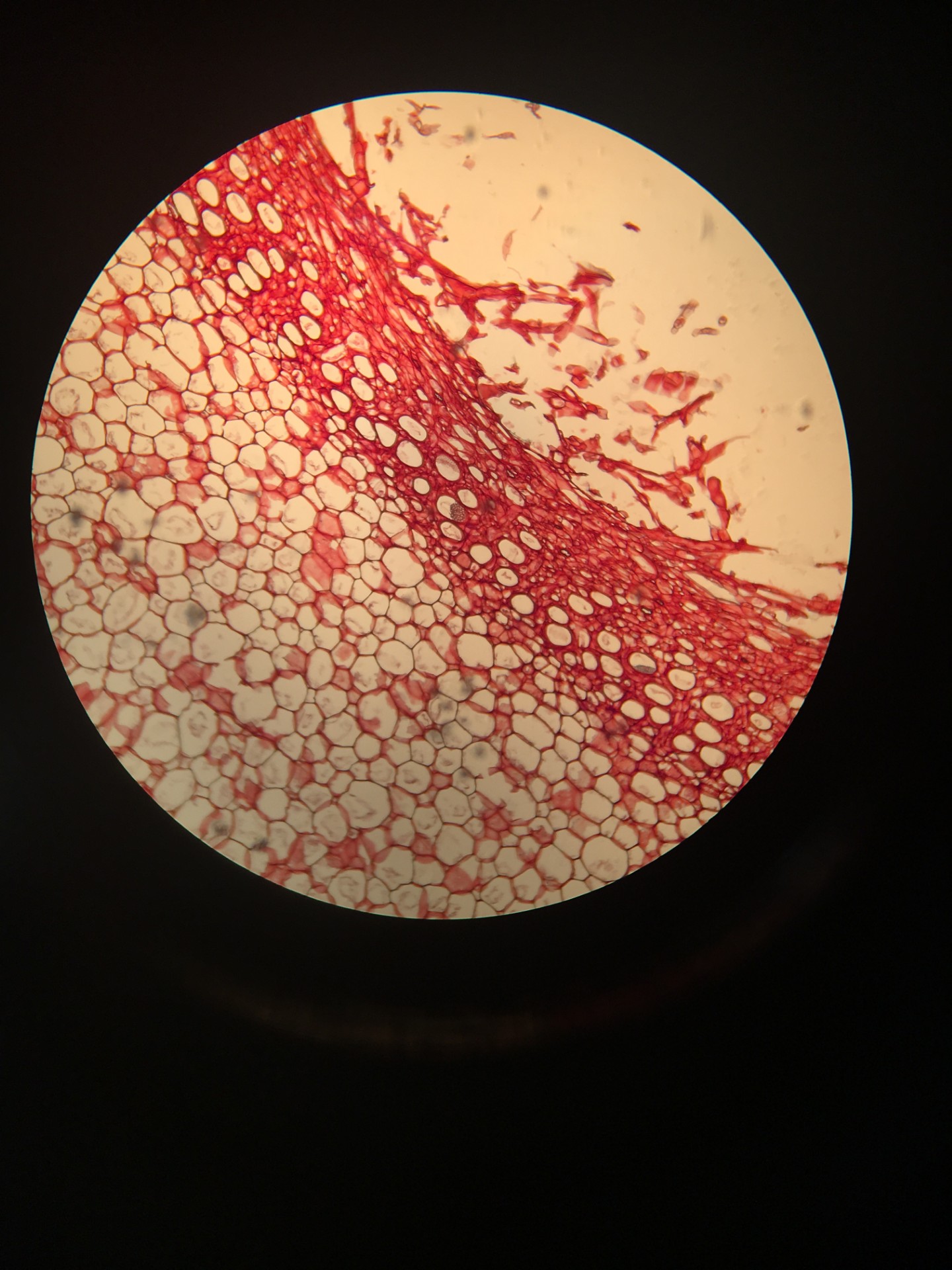

These images were all taken by me and include Rhodophyta sp., Polysiphonia sp., a dicot stem, Cyanobacteria, a gemma cup, Chlorella vulgaris, and others.
Mapping Science and Policy
Maps are powerful storytelling tools, especially at the intersection of science and policy. They can visualize environmental change, Indigenous land stewardship, and conservation challenges in a way that is both informative and artful. Maps can go beyond data points. They provide a sense of place, history, and urgency, making complex issues more accessible to broader audiences. Maps can bridge scientific research with policy discussions, helping to communicate landscapes not just as they are, but as they are changing.

An Unlikely Friendship
A long-term career goal I have is to write and illustrate a children’s science book. In this project I tried to illustrate the mutual relationship alligators and birds share. In a recent study scientists tested the “Nest Protector” hypothesis which proposed a specific mutuality between herons and egrets and American alligators. The study suggested this interaction is critical to shaping management and conservation of wetland ecosystems.
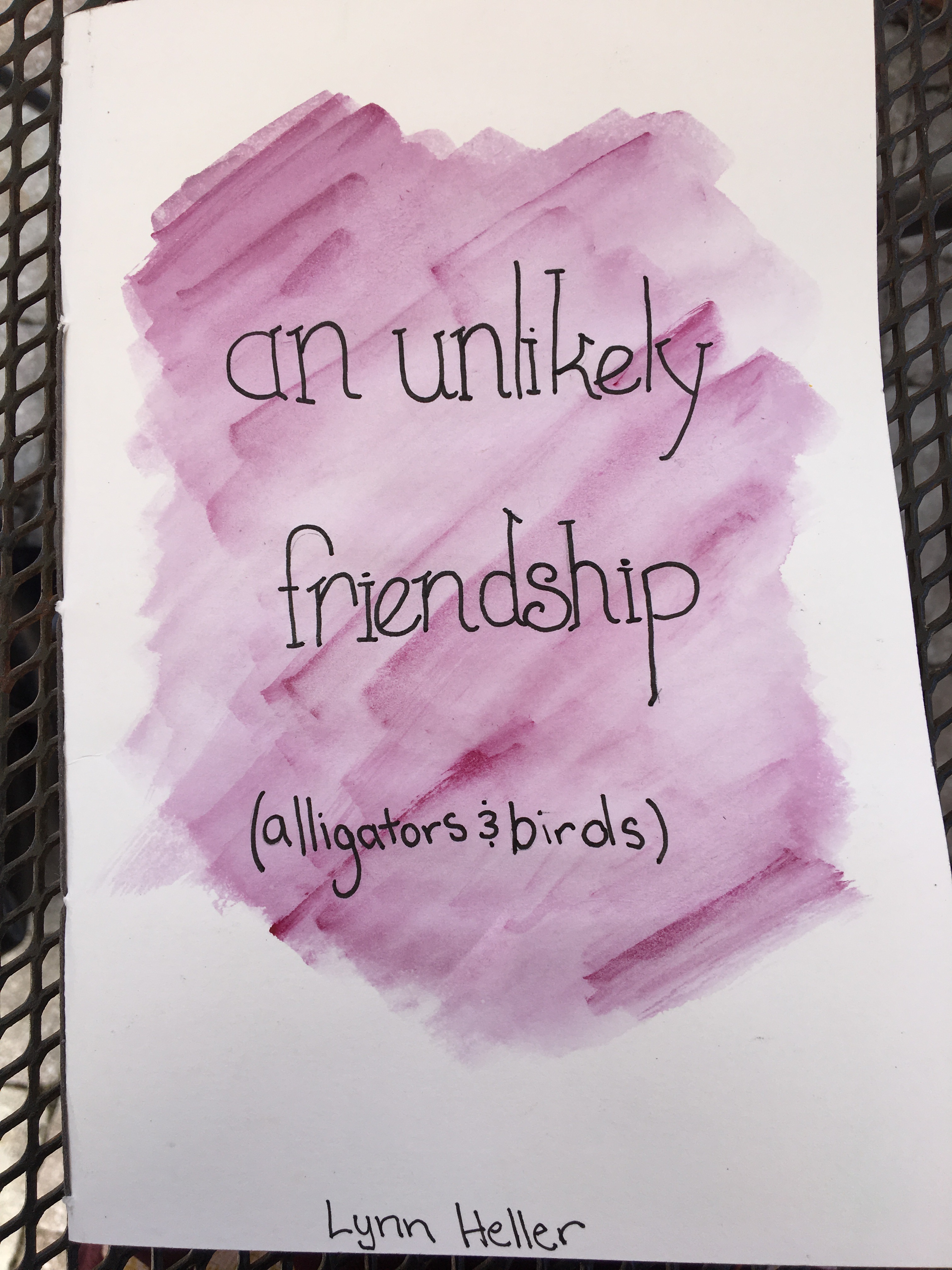
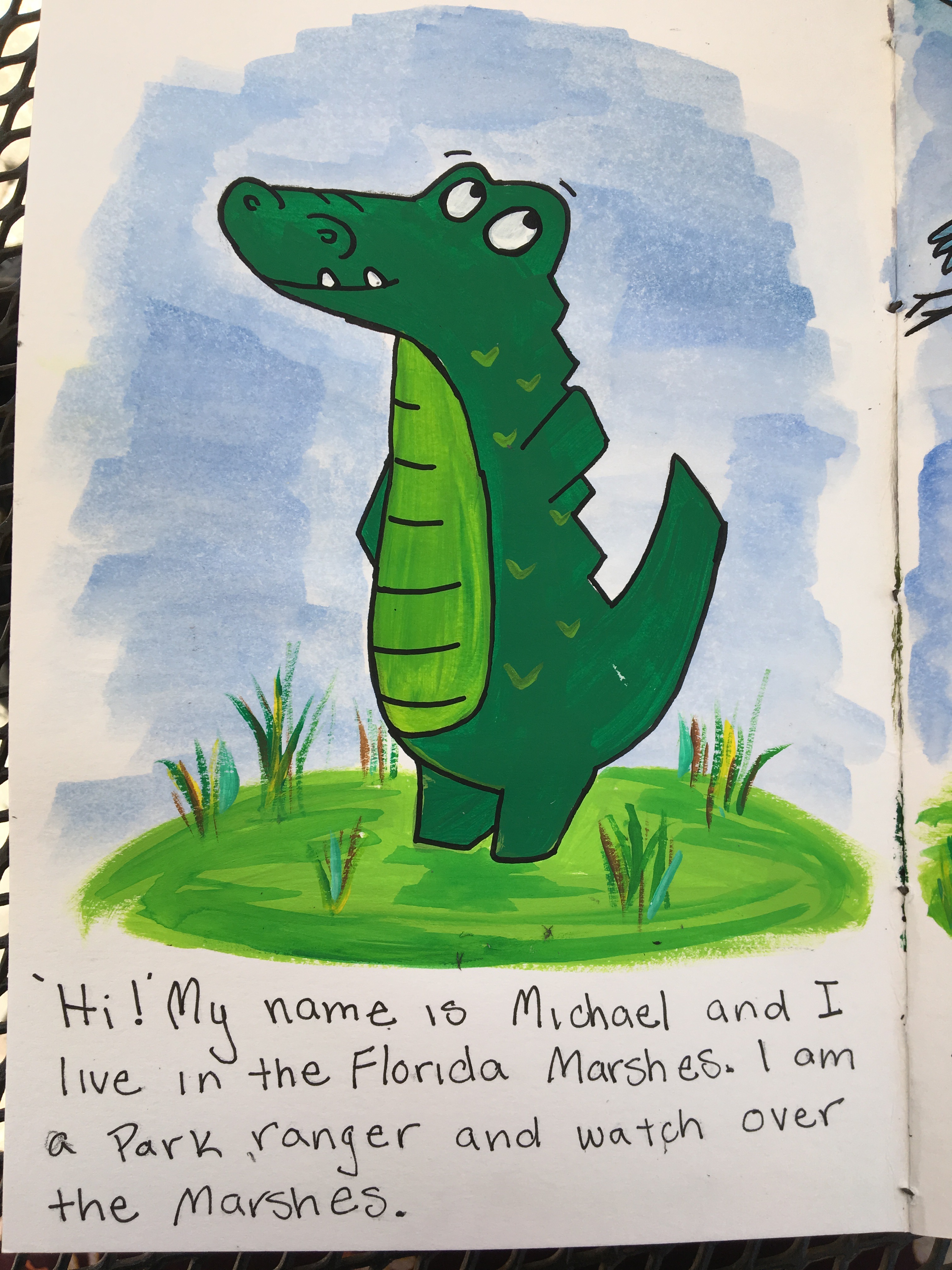
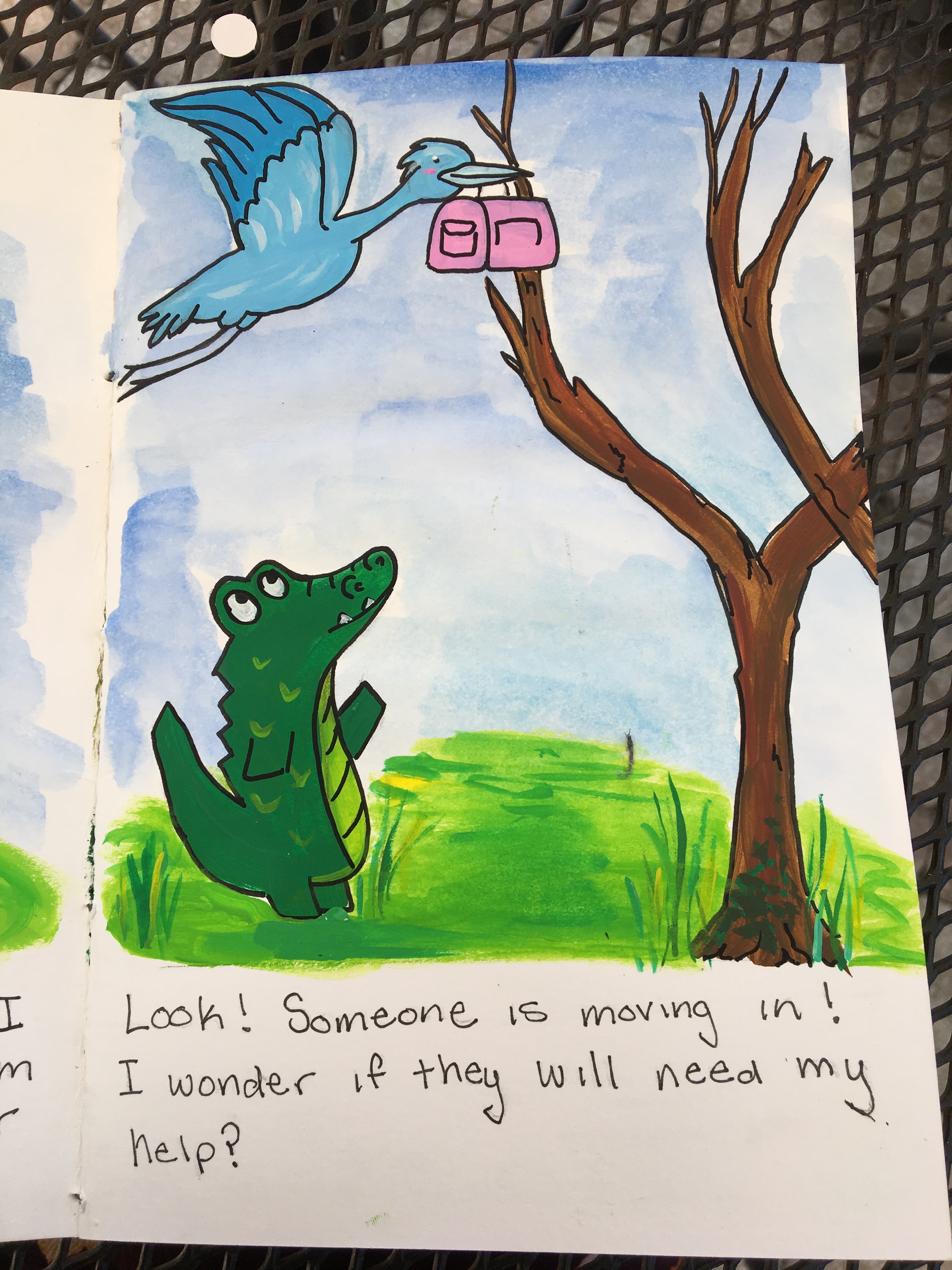
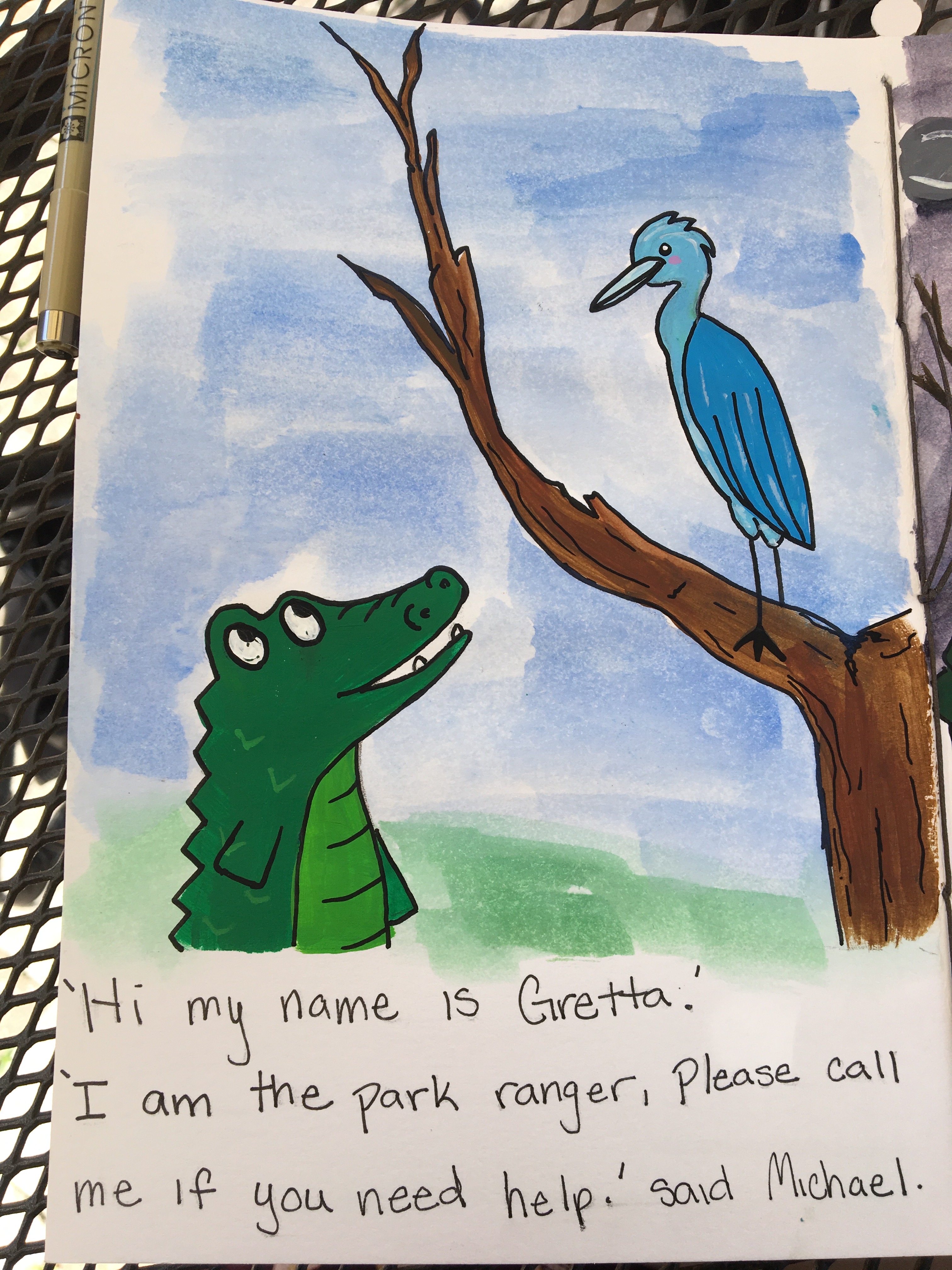


Resource: Burtner, B.F., Frederick, P.C. Attraction of Nesting Wading Birds to Alligators (Alligator mississippiensis). Testing the ‘Nest Protector’ Hypothesis. Wetlands 37, 697–704 (2017). https://doi.org/10.1007/s13157-017-0900-x
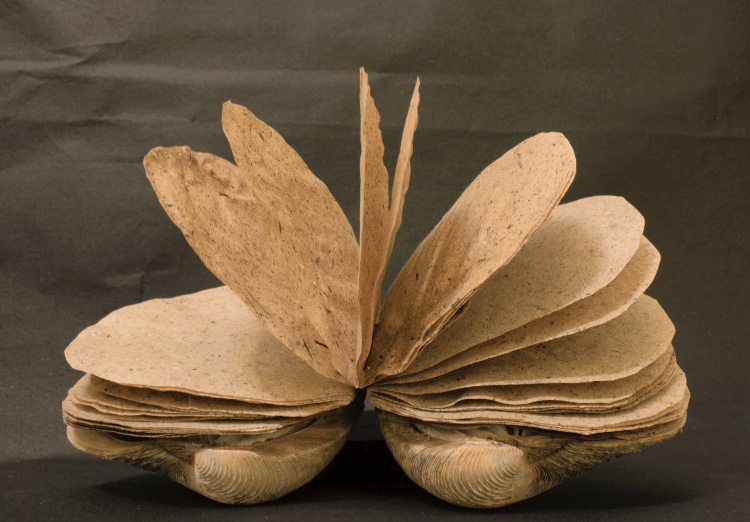
Shell Book
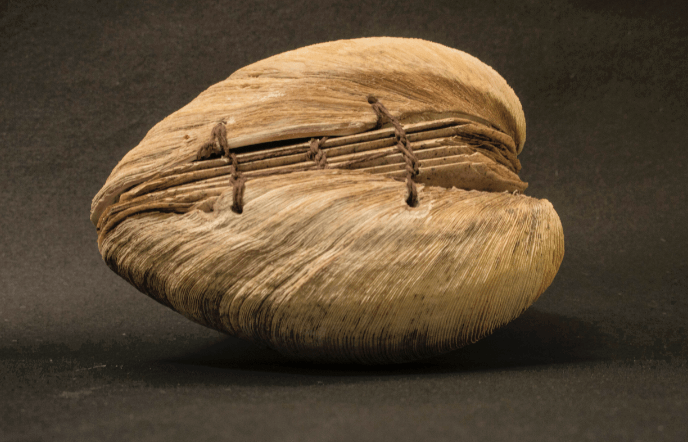
Art requires science. There is something I find absolutely stunning about an artist’s methods or process. Paper and book arts are more than just a craft, it is lifestyle. I took a course learning about the meticulous detail involved in making paper, folding and stitching pages together, and the history of printing. As an experiment I harvested Sargassum, a brown macroalgae or seaweed to use to make paper. In preparation I had to clean and boil the algae -a stinky process- and then blend it to make a pulp. The paper I made was not perfect, but it was smooth and had high opacity. I think algae would be a more sustainable option to and could easily replace wood chips. Using algae for paper does not involve destruction or disturbance to rain forests. Algae paper would use less energy because you only have to boil it to 100°C rather than the 180°C required for boiling wood chips, and you do not have to add sodium hydroxide because algae does not have lignin (an organic polymer that makes plant cell walls rigid). I did not bleach my algae paper but learned it would take five fewer stages than wood chips to bleach. Lastly, algae are one of the most efficient organisms at removing carbon from the atmosphere. Farming and harvesting algae for paper products may be a simple change towards combating climate change.
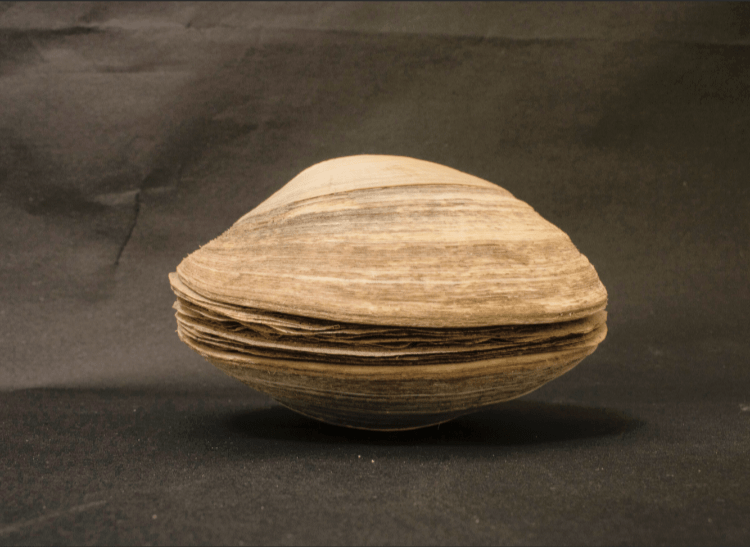
Below is the outcome of my experiment, bound between two clam shells using a wax covered cotton thread.

 The Artful Biologist