
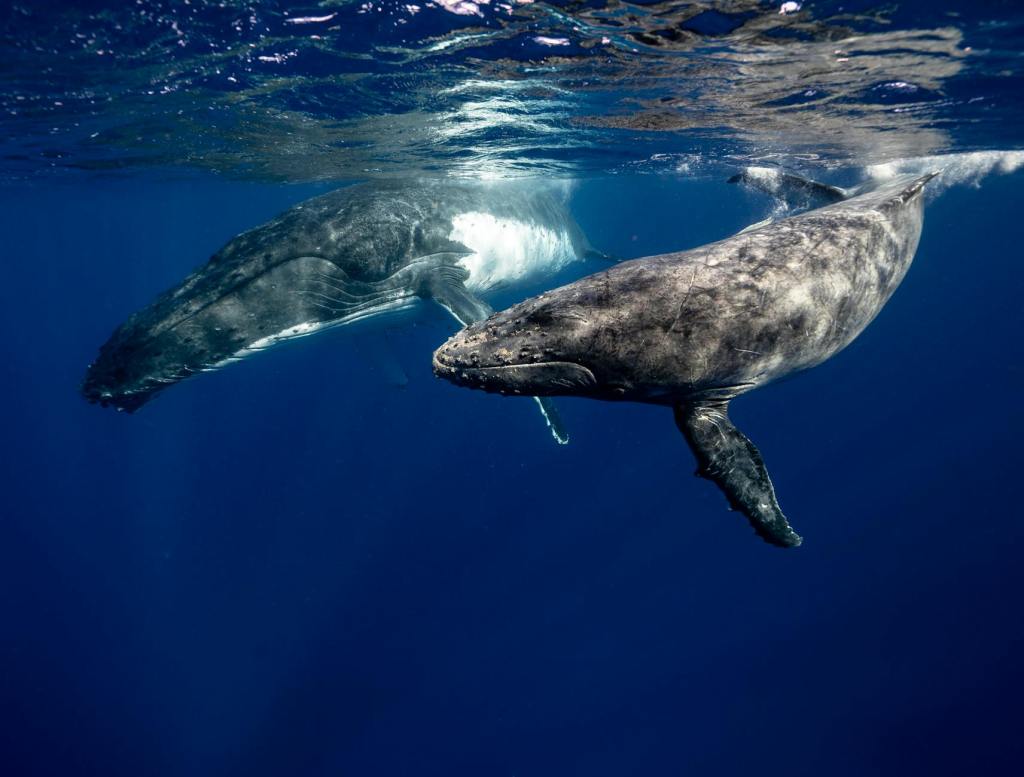
Without law enforcement, how can we save them?
“If we don’t take robust, science-based, coherent measures to protect these highly endangered North Atlantic right whales, we’re really playing Russian roulette with the entire future of the Canadian fish and seafood industry,”
Fisheries and Oceans Minister Dominic LeBlanc, CBC New Brunswick, 16 June 2018.
After last week’s blog my awareness and knowledge about acting for whale conservation really grew. While reading through my news feed this week, there was an article explaining that North Atlantic Right Whales are still dying under Canadian Law. With all the conservation groups and projects I had just read about and discussed in my blog, I couldn’t believe what I was reading. However, most of the research I had done in last week’s blog came from NOAA. So, I investigated what federal action has been done to protect North Atlantic Right Whales in Canada.
An article in the Marine Policy journal published in 2019 describes the conservation measures Canada has taken in response to human-whale conflicts over time. It is important to know that by law, governments must establish environmentally and economically viable management of natural resources. Until 2017, there were no mandatory fishery regulations put in place to minimize human-whale conflicts; only a “Recovery Plan”. Although not very cost effective, the best way to effectively manage and prevent harmful interactions involves a consistent and dedicated monitoring plan using boats, airplanes, and passive acoustic devices. Unfortunately, using satellite tagging is too invasive and harmful to the whales. For these reasons, the distribution of North Atlantic Right Whales is not fully understood. With a lack of understanding it is nearly impossible to have a completely effective management plan to mitigate human-whale conflicts.
Here is a little bit of context to understand why Canada has only recently taken action to preserve North Atlantic Right Whales. In 2017 there was a mass mortality of at least 17 whales over the course of only three months due to entanglement and ship strikes. This was an emergency. The problem was that whales were unknowingly migrating near the Gulf of St. Lawrence rather than their more well-known location, The Bay of Fundy (south of Gulf of St. Lawrence). The exact number of mortalities in Canadian waters is unknown. Carcasses drift away in currents, and deaths are rarely observed because a lot of the time whales suffer internal bleeding or punctured lungs leading to a painful slow death. What we know for sure, is there have been decades of evidence of human-whale conflict. However, this evidence was called an environmental problem and was not enough to justify a change before the 2017 mortality crisis. A societal crisis -meaning having large economic effect- would have been enough to justify a change in human activities.
In the Gulf of St. Lawrence, the snow crab trap fishing industry was booming, being valued at $246 million. This growing industry came with more shipping vessels putting whales at a greater risk to strikes and fishing gear entanglement. This is an example of a lack of integrated management. I believe this crisis could have been adverted had the government regulated whale population location and the fisheries from the start. However, as I previously mentioned, monitoring their population and migration patterns requires commitment to time and money.
In response to the mass mortality in 2017, Canadian ministers of fisheries and ocean transport were forced to take drastic measures to implement monitoring and risk reduction regulations, even though most of the damage was already done. New regulations included mandatory speed reduction to 10 knots in the western Gulf of St. Lawrence. Failure to take preliminary actions lead to regional economic issues. After 63 days the snow crab fishery had closed, and cruise ships had losses in revenue because of the reroutes and speed restrictions.
North Atlantic Right whales are predicted to be extinct in as little as 30 years if the average mortality rate is not drastically reduced. The regulations implemented in May-June 2018 proved effective and there were no reports of entanglements or injuries. These regulations are not sufficient long term from both an economic standpoint and the high whale mortality rate per year. It is imperative for conservation efforts to be strengthened and continually regulated if we want to preserve North Atlantic Right Whales. I do not believe the North Atlantic Right Whale population would be able to recover if mass mortality events such as this one continue to occur without preliminary action.
In the news article I read earlier this week, the seriousness of ship strikes on whales was examined. The article claimed that ship speed should be the easiest way to limit damage done on marine mammals. According to the article whales cannot survive a strike from a ship traveling faster than 20 knots. Whales would more likely survive a strike if ships were to maintain speeds less than 10 knots. Canada has “kindly” asked ships to slow down in the waters where the North Atlantic Right Whales congregate, but sadly most ships ignore this voluntary slowdown order. Since 2017, nine whales have died in Canadian waters. Transport Canada – a department in Canadian government responsible for regulating transportation – found 127 ships going faster than the recommended reduced speed. There is a penalty fee, but it is not often issued. I wonder if punishments/fees were more serious and continually enforced, would ship strikes occur less often?
I found it interesting that the article mentioned ships may not always be able to voluntarily slow down. This could be due to severe weather causing hazards that could endanger the crew and/or vessel. To me, this makes a lot of sense and is a reasonable excuse to not slow down. However, not slowing down because it costs money is not a reasonable enough excuse to me. Delays can be expensive; would you blame the ships? Knowledge through observations and research is the key to creating and implementing long term sustainable rules that benefit economics and conservation.
References
Davies, K. T., & Brillant, S. W. (2019). Mass human-caused mortality spurs federal action to protect endangered North Atlantic right whales in Canada. Marine Policy, 104, 157-162. doi:10.1016/j.marpol.2019.02.019
Thompson, J. (2020, June 19). Whales Keep Dying Under Canadian Law That Gently Suggests Ships Slow Down. Vice.

 The Artful Biologist
Leave a reply to Janet Triggs Cancel reply