
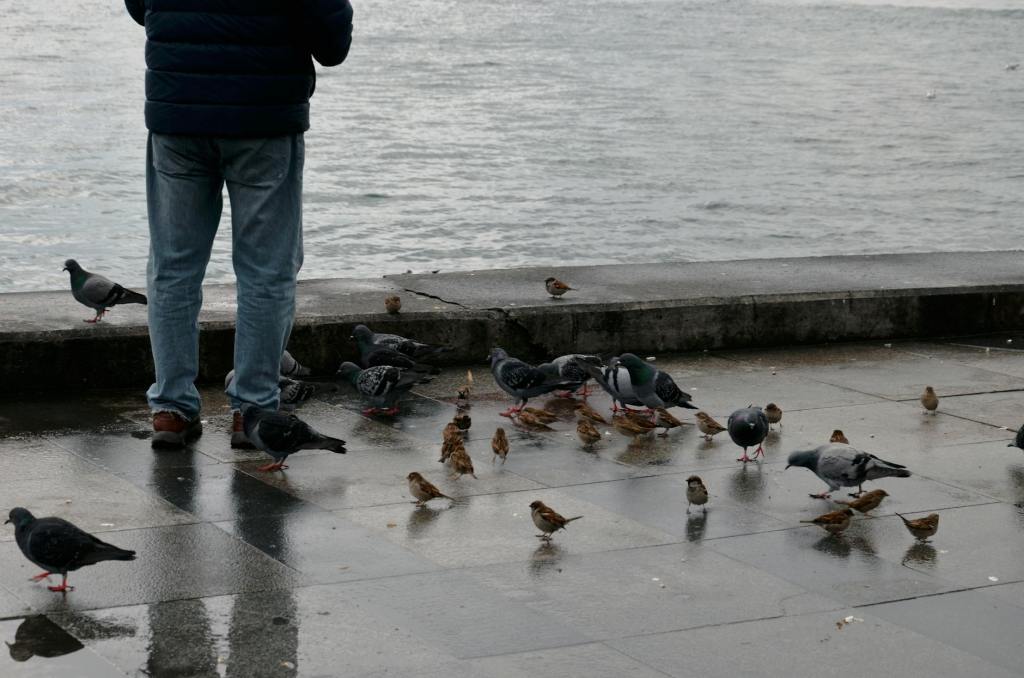
Make Way for the Sparrows
Have you ever been shopping at your local supermarket or hardware store and spotted birds nesting in the rafters? Have you ever wondered why you see birds flying around airport terminals? Many of our feathered friends have migrated into large convenience stores and warehouses in search of food or safety. Some of the species we see include House Sparrows, starlings, pigeons, and doves.
Why This Happens
I struggle to understand the attraction for birds entering a loud supermarket or airport terminal. With the constant commotion of music, machines, and people walking by, I would have guessed it would be too stressful of an environment to feed or nest. So why are they invading? The obvious answer to this is because they are seeking out food, water, or a place to nest. Birds are just looking to lead a simple life inside what we see as a warehouse, but they see as the largest birdhouse haven. However, I do wonder if their migration has to do with a lack of territory in the wild that comprises their necessities.
Prevention
It is comical to think about how birds have learned to wait for automatic doors to open or use shopping carts as a Trojan horse. Birds are incredibly smart and adaptive. We can prevent these feathered shoppers by cleaning entryways of trash and crumbs, checking carts before bringing them inside, and keeping doors closed. There are also some terrifying looking balloon decoy predators that can scare birds away. However, these decoys are not attractive to customers or guests.
Extraction
It is nearly impossible to completely prevent birds from entering our stores, and that’s why companies like Fly Bye Bird Control and Safe Haven Bird Removal exist. These skilled removers use a variety of techniques to safely remove birds and release them into the wild. Their main technique is to avoid scaring or stressing out any birds because that fear or change in behavior can make it even more difficult to capture them. Experts use mist nets on poles to capture birds residing high up in rafters. Larger stores or buildings with higher ceilings make it easier for birds to avoid these nets. Other strategies include live traps and audible and visual deterrents. Furthermore, it is important for these experts to determine why birds are going into a building in the first place. Then, they can try to eliminate this reason (remove trash, excess food, crumbs) to prevent future invasions.
Cost
In the United States, hundreds of millions of dollars a year are spent on removing birds from airports. Removing a single bird from a house can cost $200. Removal of a bird from a grocery store would cost $700. Some bird removals can cost more than others. For example, if there was a hawk in a warehouse, it could cost $900 to remove. Therefore, it is important for companies to monitor their buildings by keeping bird-specific behaviors in mind. Otherwise, they may end up paying a lot for winged-pest removal. Science research is also imperative to understanding bird behaviors for executing effective removal and prevention methods.
References
Beidle, B. (2020, April 09). Keeping House Sparrows Out of Big Box Stores. Retrieved November 15, 2020, from https://www.pctonline.com/article/keeping-house-sparrows-out-of-big-box-stores/
Gordon, C. (2018, June 27). What Happens When Birds Invade Stores? Retrieved November 15, 2020, from https://www.audubon.org/news/what-happens-when-birds-invade-stores

 The Artful Biologist
Leave a reply to Paul Heller Cancel reply