
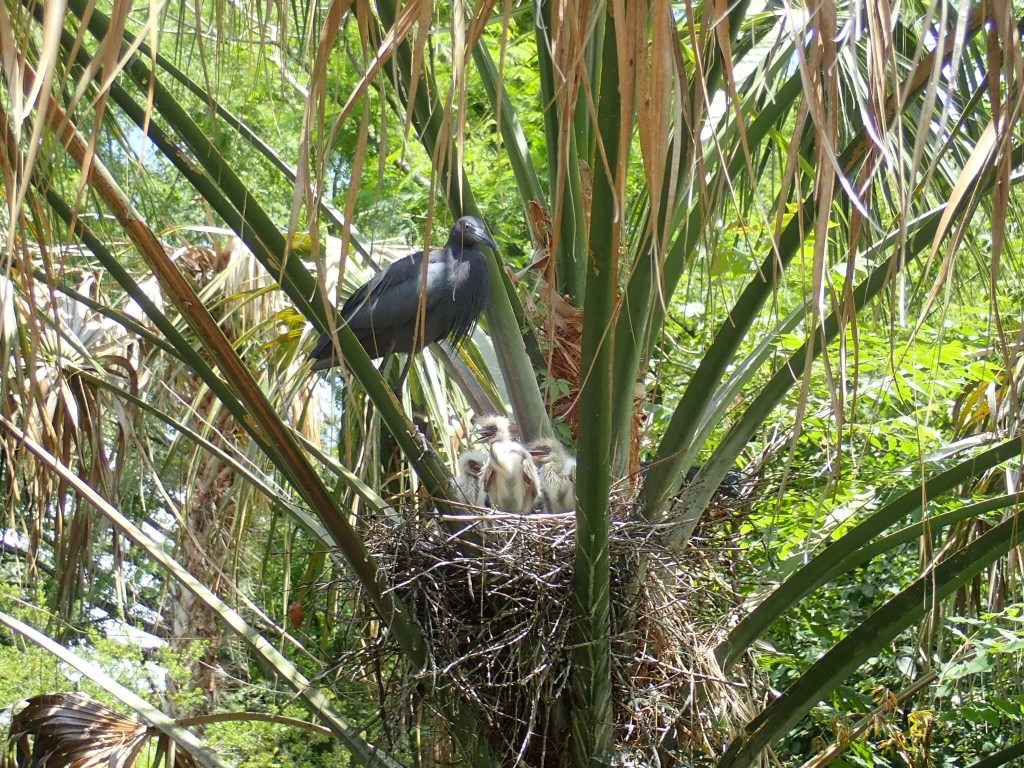
Nesting basics
At the beginning of every nesting season, each species of bird must find a safe and warm space to lay its eggs. Nest locations vary from species to species. Some will nest in trees, on the ground, on the side of cliffs, or in human-made structures. Typically the female chooses the location and builds a nest. However, in some species, both parents or just the male will contribute to the nest. Ordinarily, birds collect all kinds of supplies to construct the perfect nursery. Natural nesting supplies include indigenous materials, grass, leaves, mud, lichen, and fur. Sometimes birds will use unusual materials to construct a nest. These unnatural materials may comprise paper, plastic, yarn, foil, and pieces of clothing.
Living in a polluted world
We are all well aware of the global pollution problem. It is projected that in 2050 the generation of municipal solid waste worldwide will be 3.4 billion metric tons a year. I believe this number includes plastic and electronic waste. This increasing number is a result of population growth, economic growth, consumer habits, and urbanization. Why are birds using artificial materials in their nests?
- to replace unavailable natural nest materials;
- to strengthen the structural integrity of the nest with plastic;
- to add decoration for mating purposes;
- to repel unwanted individuals. Some of these ideas seem like benefits for birds although, waste pollution poses serious enduring threats to birds.
Researchers need to continue to study the consequences and ecological risks associated with waste pollution and birds. There is still a vital gap in our knowledge of the long-term effects of debris in nests.
Fun Fact! Brown-headed Cowbirds (Molothrus ater) are known as brood parasites. Females will quietly search for another species’ suitable host nest to lay their eggs. The foster parents will unknowingly raise the chick as their own, often at the cost of their offspring.
Unique Nests
There are many different sizes and shapes of nests. Some nests are platforms, some are simply holes in the earth, some adhere to buildings or cliffs, but the most common is a cup shape. Today I wanted to discuss some unique nest types.
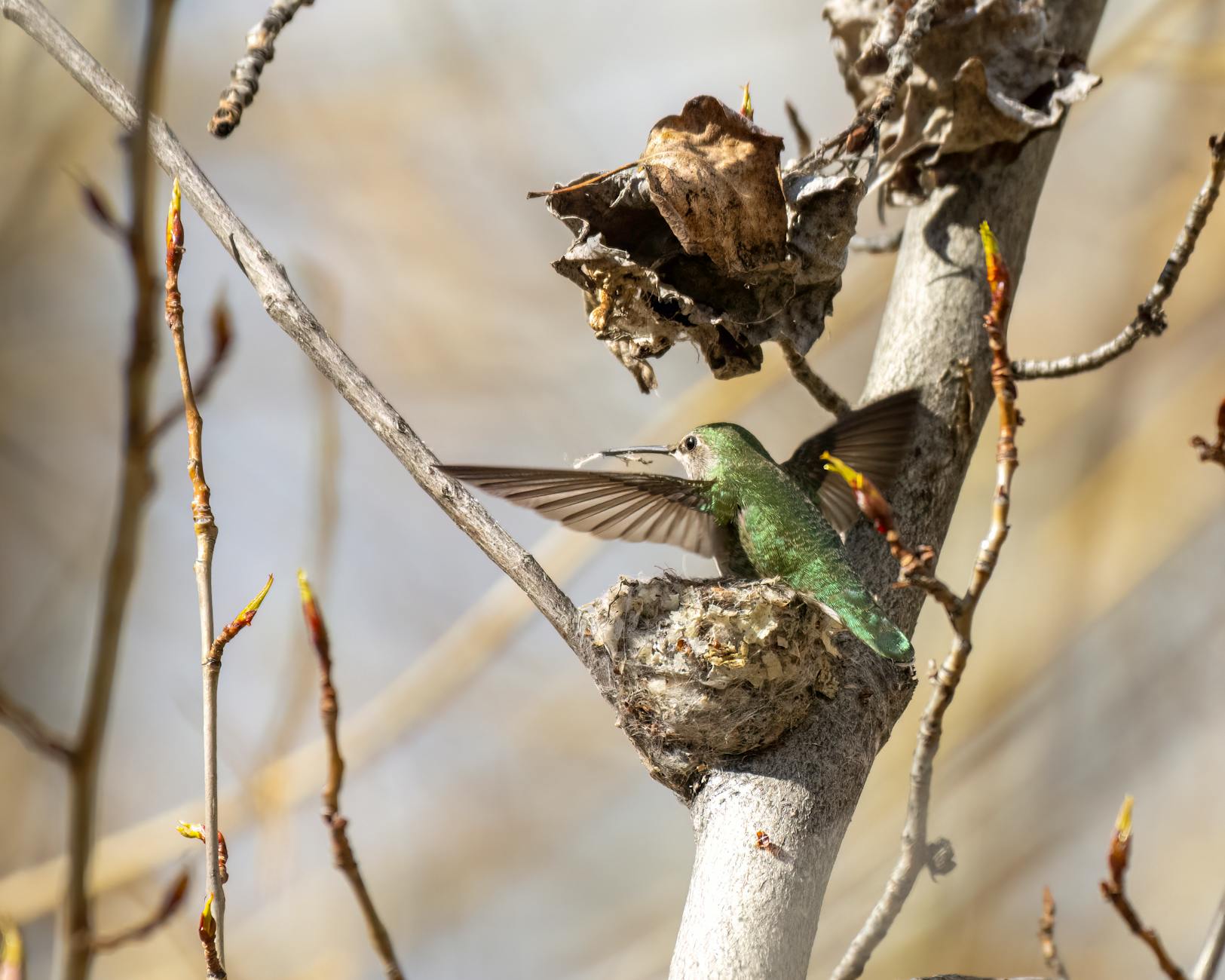
Rudy-Throated Humming Bird (Archilochus colubris) – This nest is only two inches wide by one inch deep and made of thistle held together with spider silk. The bird will decorate the outside of the nest with moss or lichen for camouflage. These nests take about eight days to build.
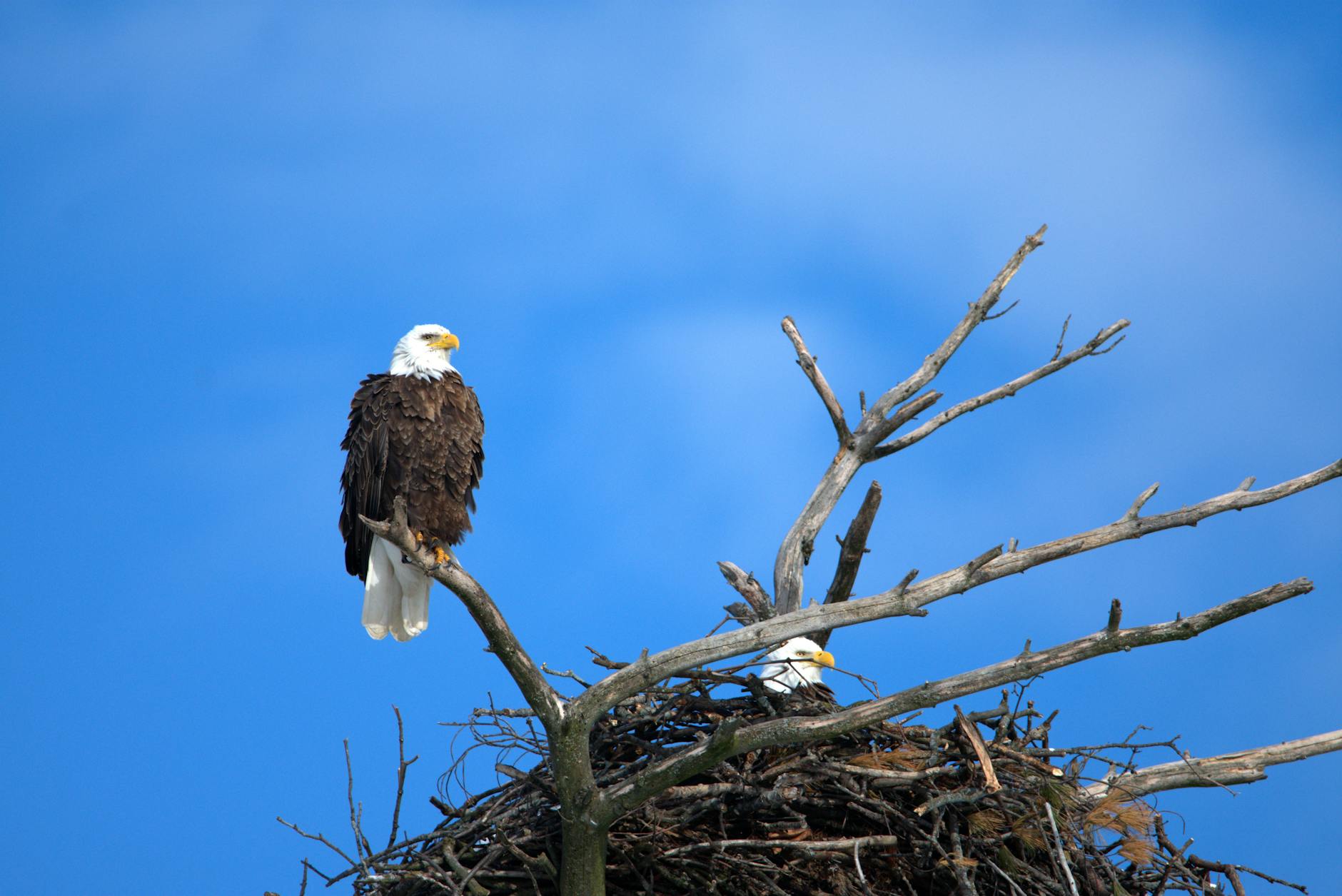
Bald Eagle (Haliaeetus leucocephalus) – Bald eagles will nest in trees with easy flight access and good visibility. Their nests are about 5-6 feet in diameter and 3 feet tall. The shape of the nest varies depending on the tree type. The nests are composed of sticks woven together with grass and moss servicing in any gaps. These nests can take up to 3 months to be assembled but are reused each year.
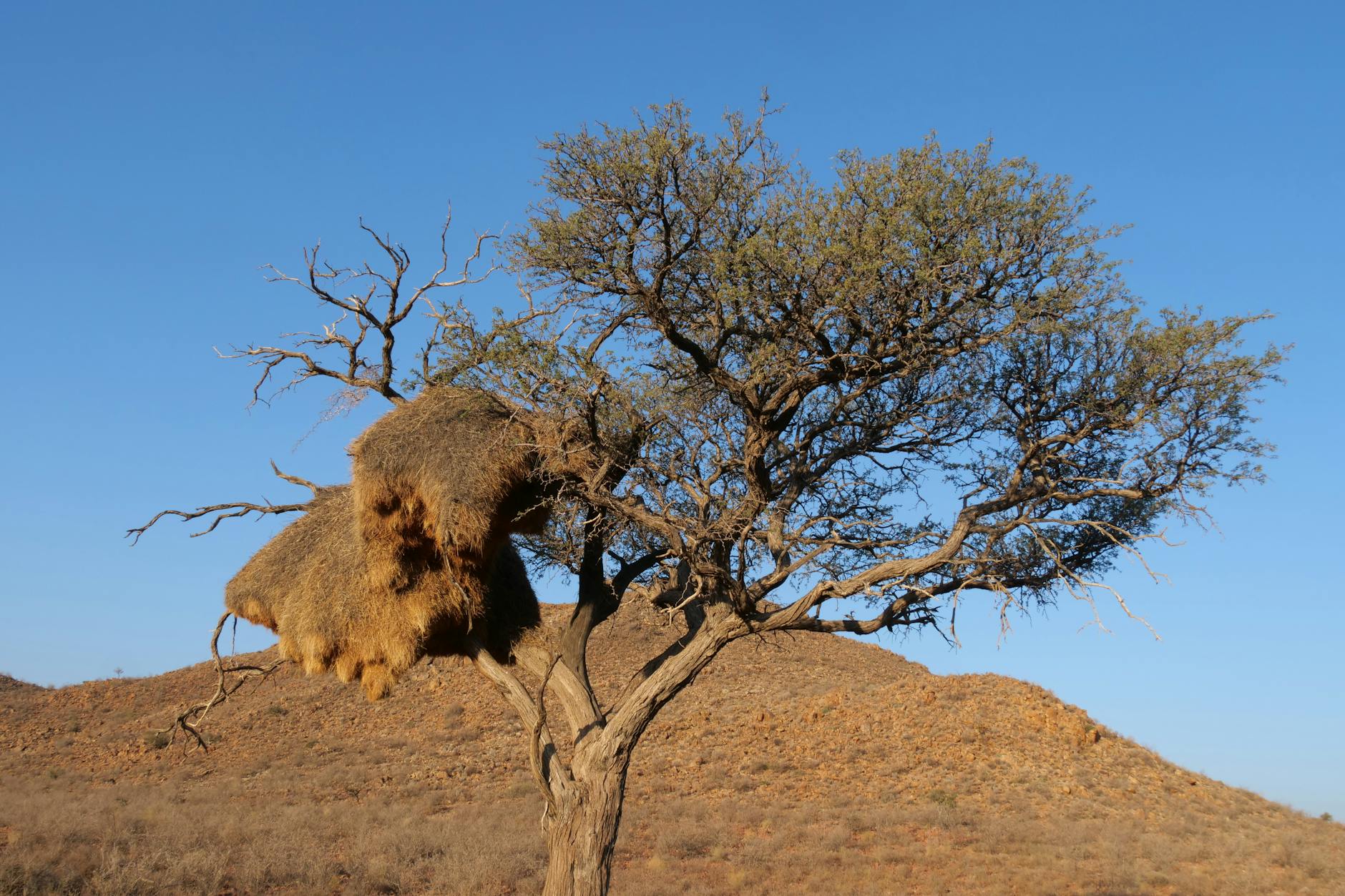
Sociable Weaver (Philetairus socius) – In the deserts of Southern Africa resides the largest and most populated nests. The sociable weavers nest in groups of 100 breeding pairs and create a nest with multiple chambers like an apartment. The nests are about 20 feet wide and 10 feet tall.
European Bee Eater (Merops apiaster) – Not all nests have to be made of natural materials in trees or bushes. The European Bee Eater excavates a cavity in the sand on a riverbank or sandbank. The bee-eater will use its bill as a drill and scoop out sand with its feet. Since the burrow can take twenty days to complete, bee-eaters often nest in colonies, helping each other build their nest.
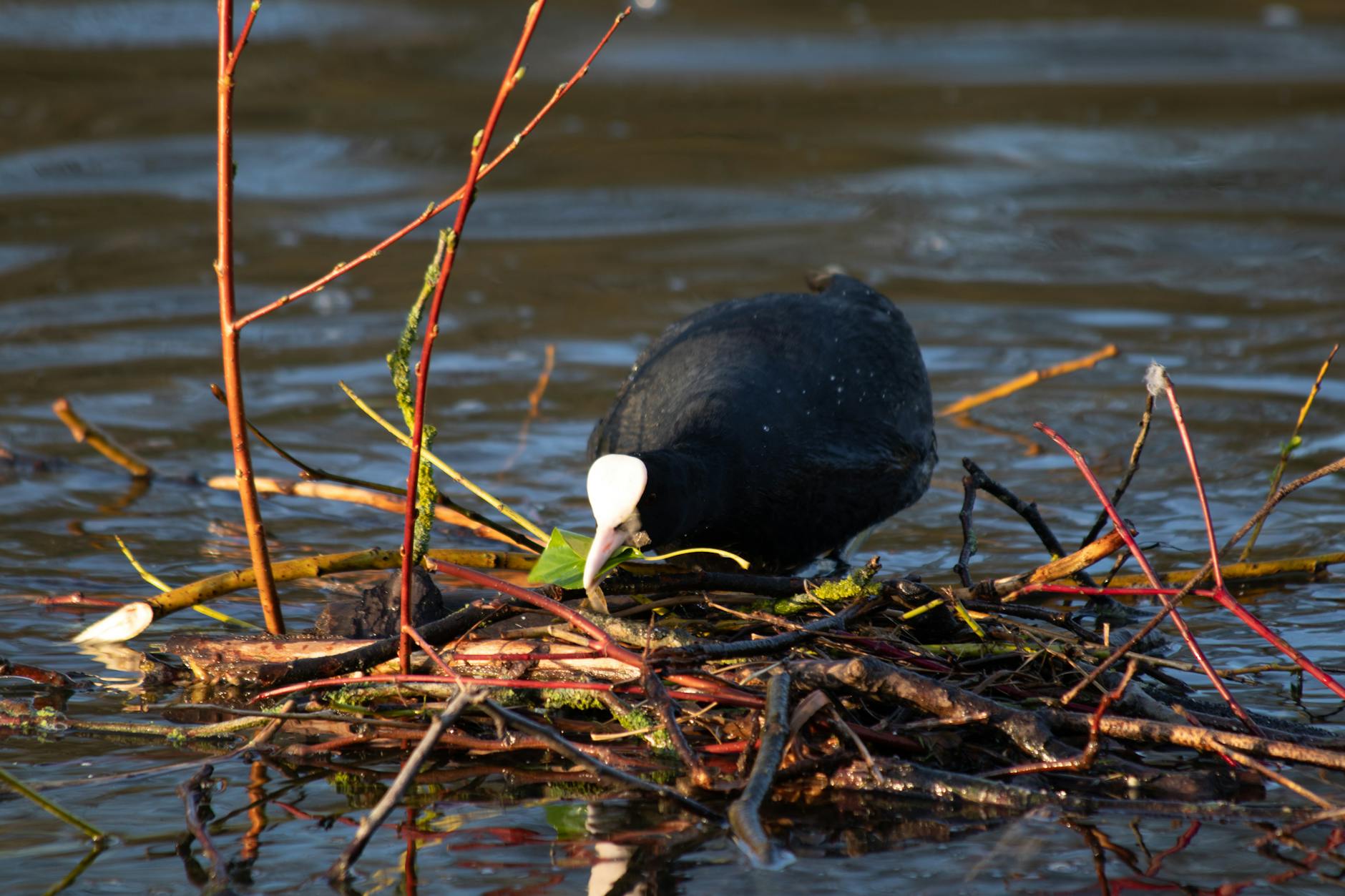
American Coot (Fulica americana) – The American Coot carefully weaves a basket with a foot-long diameter. The unique aspect of this nest is that it is built over the water on a floating platform. Their nests are concealed by the heavy surrounding vegetation like reeds, grasses, and cattails.
Common Tailorbird (Orthotomus surtorius) – The name of this species gives us a hint at how they build a nest. The tailorbird sews leaves together with natural fibers to create a cradle for the nest to sit. The leaf acts as camouflage for the nest.
Malleefowl (Leipoa ocellated) – This species nests in a crater of leaf litter and soil. As the organic matter decomposes, it generates heat which helps incubate the eggs. The male will probe the nest to check the temperature. Both parents adjust the soil content to regulate the mound’s temperature.
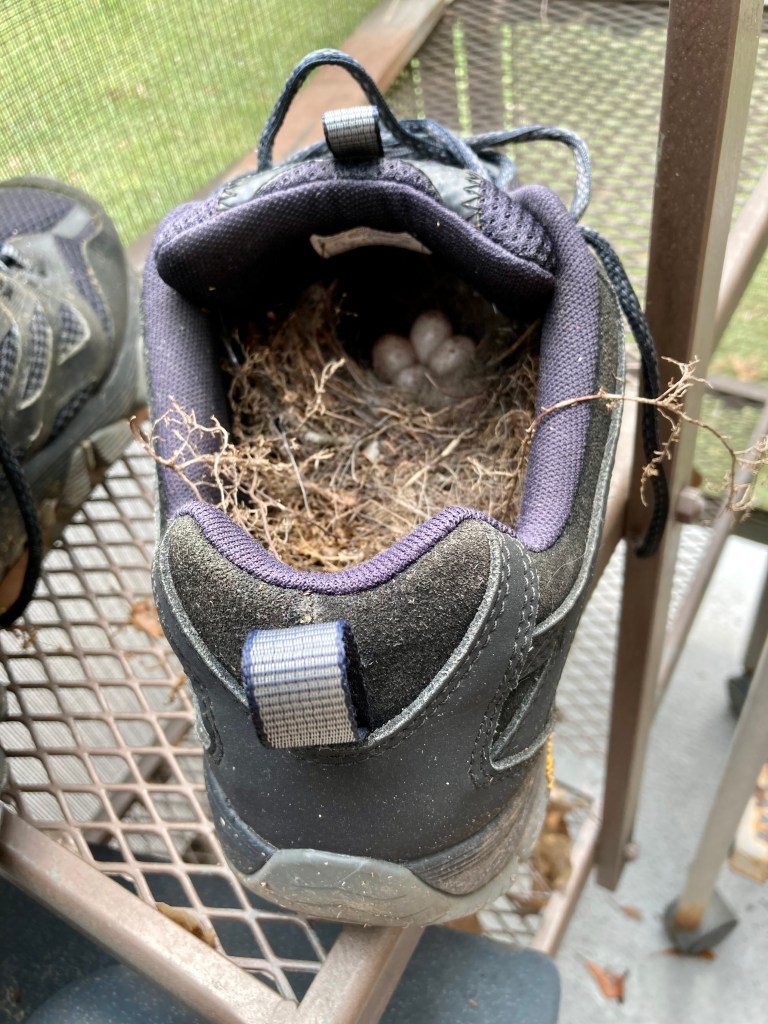
I was inspired to write this blog after finding a small bird’s nest inside a shoe. Moments like these make me think about how we impact the environment and how, if possible, can nature adapt. If you find a nest near your home, the best thing you can do is be respectful and do not disturb the nest. Luckily nesting season isn’t very long, so if you find a nest in your boot, you might only have to wait four weeks before getting it back.
References
Zuzanna Jagiello, Łukasz Dylewski, Marcin Tobolka, José I. Aguirre, Life in a polluted world: A global review of anthropogenic materials in bird nests, Environmental Pollution, Volume 251, 2019, Pages 717-722, ISSN 0269-7491, https://doi.org/10.1016/j.envpol.2019.05.028.
Malhotra, R. (2015, March 7). The 16 most amzing nests built by birds. BBC. http://www.bbc.com/earth/story/20150307-the-16-most-amazing-bird-nests.
Online bird GUIDE, BIRD ID help, life History, bird sounds from Cornell. All About Birds. (n.d.). https://www.allaboutbirds.org/news/.
Chandlay, R. (2021, January 27). European BEE-EATER (Merops apiaster): 10 interesting facts. Avibirds.com. https://avibirds.com/european-bee-eater/.
Heinrich, B. (2014). Africa’s Social Weaverbirds Take Communal Linving to a Whole New Level. Audubon. https://www.audubon.org/magazine/march-april-2014/africas-social-weaverbirds-take-communal.
Tiseo, I. (2021, August 2). Topic: Waste generation worldwide. Statista. https://www.statista.com/topics/4983/waste-generation-worldwide/#topicHeader__wrapper.

 The Artful Biologist
Leave a comment