
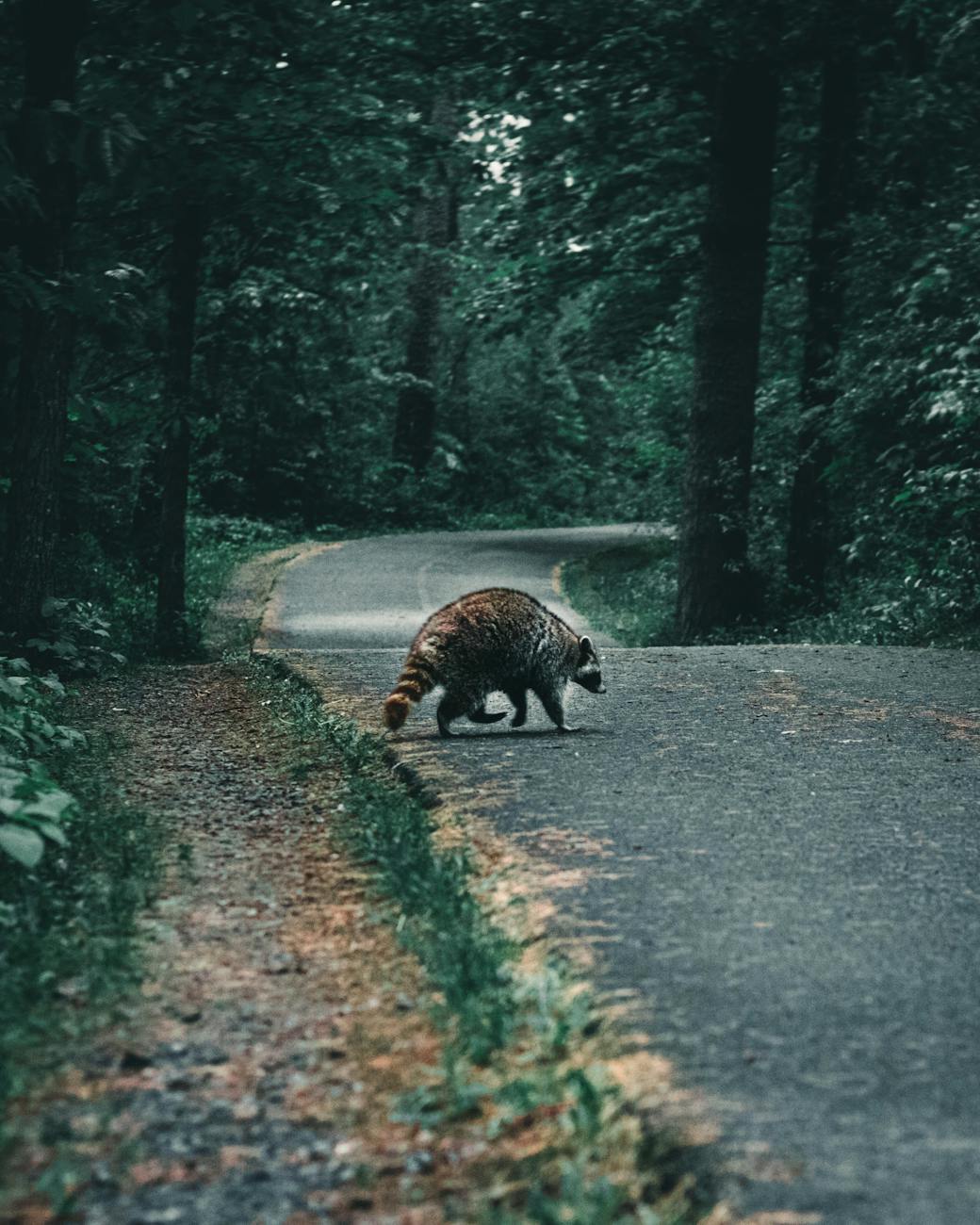
We often think of nature as a vast, continuous fabric of green. But for the wildlife living within it, the modern world has pulled that fabric apart. What was once a seamless landscape is now a series of isolated patches, separated by highways and the sprawling gaps of development. For a wandering salamander or a territorial tamarin, a single road isn’t just a line on a map, it’s a tear that turns a simple journey into a life-threatening one.
Frogger in the Hudson Valley
The warmer temperatures and rain we have been experiencing in the Hudson Valley has initiated the annual migration of amphibians like frogs and salamanders, species of high conservation concern. The wood frog, spotted salamander, Jefferson-blue spotted salamander, and marbled salamander emerge from their underground shelters in the forest and make their way to vernal pools for breeding. Vernal pools are temporary, seasonal wetlands that fill with rain or snowmelt in the spring and dry up by summer. They make a safe breeding ground because they lack predators. Unfortunately, the forests and wetland habitats are often disconnected by development. So during their migration they often encounter roads where the mortality from vehicles is high. To address this, the State developed the Amphibians Migrations and Road Crossings project, which enlists volunteers to survey roads and safeguard the frogs and salamanders. This has proven to be a fairly successful program, with over 40,000 amphibians assisted across roads since the program started in 2009. The project has also collected data on where migrations occur, weather conditions, traffic conditions, species observations, and mortalities.

There are other successful programs and mechanisms that have proven to connect species to different ecosystems and each over in developed areas.
Make way for the tamarins
During the 1970s, golden lion tamarins nearly went extinct. Their population size was estimated at just a couple of hundred individuals! This was mainly because of illegal pet trade and habitat loss and fragmentation. In Brazil, bridges and corridors have recently been built in biological reserves to help the threatened species cross sections of a forest that is fragmented by highways and cultivated fields. This territorial species lives in groups until ready to breed, but finding their own territory is a challenging task in a fragmented habitat. In response, Associação Mico-Leão-Dourado (AMLD), an environmental NGO, purchased a former cattle range to extend the União Biological Reserve and connect it to a larger adjacent forest. This has provided a safe corridor for the tamarins to cross.
AMLD has also built wildlife bridge across the BR101 national highway. The bridge is covered with native trees, shrubs, and plants that simulate a natural forest environment and entice the species to use. Many tamarin families pass with no issues but there are still some who are hesitant. This could be an indication of certain individual behaviors or personalities among tamarins. Those who are more brave are likely to cross. This may change as the vegetation matures but in the meantime, many other species of birds, mammals and lizards are taking advantage of the bridge.
While Brazil’s wildlife bridge is helping tamarins overcome isolation, California has recently broken ground on the Wallis Annenberg Wildlife Crossing. Spanning ten lanes of the 101 Freeway near Los Angeles, it will be the largest wildlife crossing in the world. Much like the tamarin bridge, it will be covered in native vegetation to entice mountain lions and other species to cross. These overpasses are designed to reconnect fragmented island populations before they disappear.
Whether it is a volunteer carrying a Spotted Salamander across a rainy road in New York, or a massive green bridge over a California freeway, the goal is the same: connectivity. Conservation is evolving and we are beginning to learn that maybe it isn’t enough to just protect a patch of forest. We have to protect the pathways between them because they aren’t just moving animals, they are moving genes, food, and creating resilience.
Artful Action
Drive with care especially near wetlands and wooded areas. And if you live in the Hudson Valley, consider joining the Amphibian Migrations and Road Crossings project as a crossing guard.
Resources
https://www.iucn.nl/en/news/a-corridor-for-the-golden-lion-tamarin-in-brazil/
Leave a Reply